
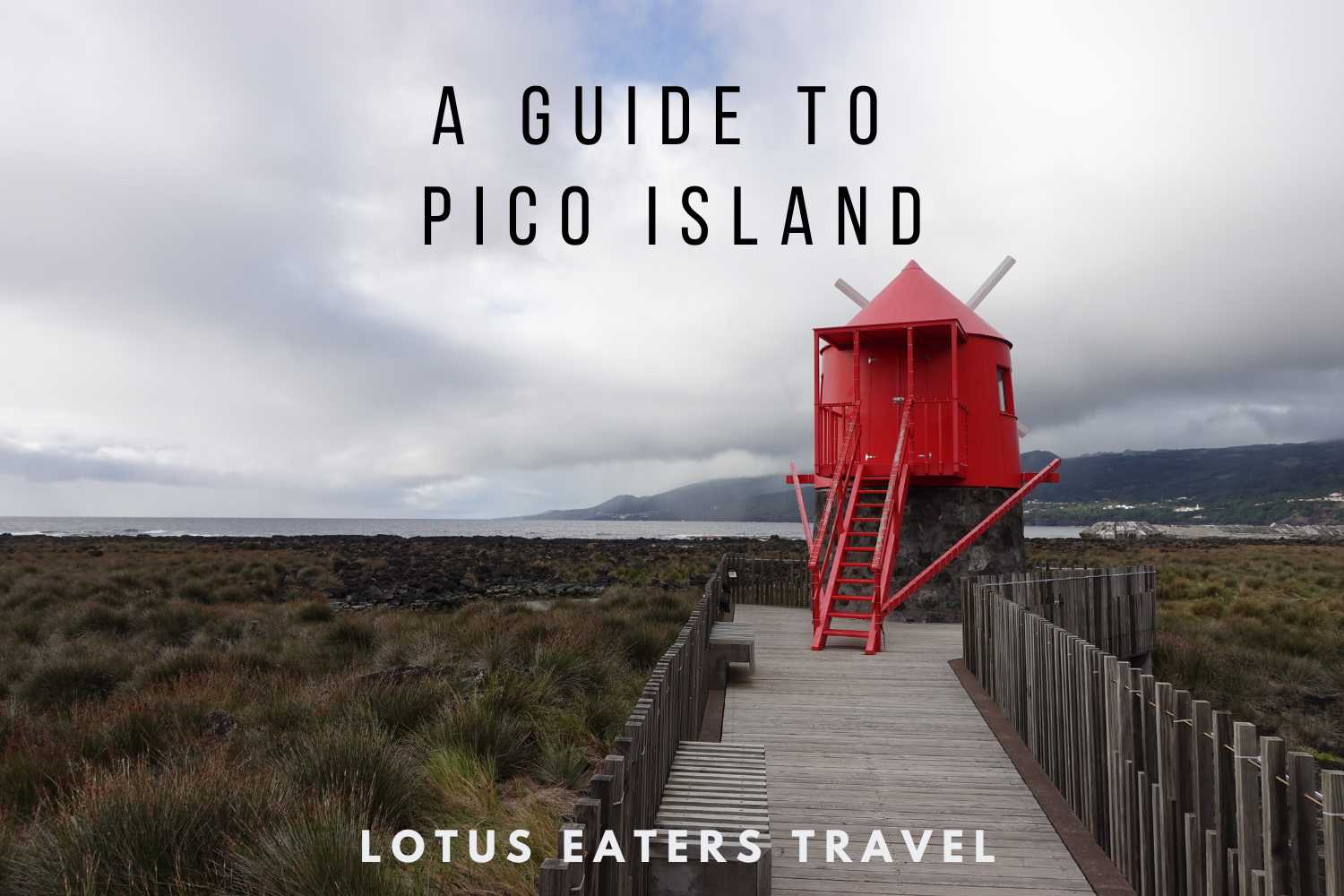
TWO OR THREE DAYS ON PICO ISLAND: OUR ITINERARY.
When I first read about Pico Island, I couldn’t quite picture it. A small volcanic rock adrift in the Atlantic, covered in vineyards and watched over by an imposing peak. It sounded intriguing but, honestly, I wasn’t sure what to expect. Would it live up to the hype? Would there be enough to do? Was it worth the extra ferry ride?
After three days on Pico, I can honestly say it was one of the highlights of our trip. From wandering through UNESCO-protected vineyards to marvelling at the sheer drama of its lava-strewn coastline, this little island completely charmed us.


In this post, I’ll share our two- to three-day itinerary for exploring Pico Island, including some of our favourite spots, unexpected discoveries, and tips to make the most of your visit.
Is Pico Island worth visiting?

If you’re planning a visit to The Azores, you’ll already know roughly what to expect – outstanding beauty, nature and wildness. But don’t expect too many fancy resorts, white sand beaches or bells and whistle. The islands are rustic, and this is one of the key reasons to travel here.
When it comes to deciding which islands to visit, it can be a very tricky conundrum. Especially if you’re short of time. Personally, we adored the three islands of Faial, Pico and Sao Jorge. The three are close together and a week would allow you to visit all of them.

Pico itself is well worth visiting and will tickle travellers who enjoy wine, wild scenery and hiking (especially mountain goats who want to scramble up Pico.) Incidentally, Pico is also known as the driest and warmest of the isles –hence wine grows well on the island. If you are a lizard like me, this will please you.
Finally, one of the things that we really loved about Pico, is that there are roads and paths close to the coastline. On all the other islands, main roads tended to stick to higher ground, with small roads jutting down to the coast. Pico is flatter and more low lying near to the water, particularly to the west of the island. This gives it a different feel to other islands.
How long do you need on Pico Island?
We opted for three days and three nights on Pico Island, which felt like the right amount of time to explore but without rushing. I think it’s important when visiting the Azores not to have such a tightly packed itinerary that you have no flex left for spontaneous wanderings.
Remember, these islands are tiny, and you can just drive until you discover something that catches your eye. That’s such a unique way to travel and an absolute thrill. So, make sure you plan in time to do this.

If you were short on time, and particularly if you don’t want to climb Mount Pico, you could see the highlights of Pico Island in two days. That said, if the weather is good, you may want an entire day just languishing by a natural pool. I know I would.

How to get to Pico Island?
You cannot fly into Pico Island directly from the UK, USA or mainland Europe. Instead, you will need to fly from São Miguel or Terceira – both islands are connected to Portugal. Flights, operated by SATA, are under on hour from either of the larger islands, run frequently and cost between €50-100. Expect a small plane and an enjoyable experience!
As Pico Island is one of three “Triangle islands,” you can also take ferries between Pico, Faial and Sao Jorge. The ferry from Horta (Faial) to Madalena (Pico’s main town) takes around 25 minutes and costs only a few Euros.
The boat between Sao Jorge and Pico operates from São Roque do Pico (a town to the north of the island) and takes about 40 minutes to cross the water. You can also take ferries between Madalena and Sao Roque do Pico (or of course drive.)
Boats between the triangle islands operate all year round.
In summer, there is a seasonal ferry route which connects Terceira and the triangle islands including Pico. The route operates a few times per week and takes between seven and eight hours.
You can book all ferries in advance through Direct Ferries (which charges a small booking fee), or direct with Atlanico Line (not the easiest site to use, but no booking fee.)
Do you need a car to get around Pico?

In short, yes. You’ll need a hire car if you intend to visit Pico in any great depth. Public transport is available but is not particularly regular.
We hired a cheap car in Pico and found driving around the island quite easy. Even the drive up to Pico itself was not too bad.
That said, if you were willing to arrange tours, you could explore the island on a full day tour, like this one. If you do want to climb Pico, you’re best off getting a hire car, as most guided trips do not include transport to the mountain hut.
For a detailed guide on hiring cars and driving in the Azores, find our blog post here.
Pico island in two or three days: our itinerary
I’ve set out a three-day itinerary, because I think that’s an ideal amount of time on the island. But, if you are not too interested in climbing Mount Pico, you could condense this into two days. As always, our itineraries are a mix of adventure (usually hiking), relaxing, sightseeing and good eating/drinking.
You can find all locations mentioned in this blog post in the map below.
Day 1: Arrival & the North Coast
Arriving in Pico

Our journey to Pico began with a short ferry ride from Horta, waving goodbye to Faial’s charming skyline and its colorful marina, a bittersweet farewell to an island we had grown quite fond of. As the ferry glided across the channel, Pico Island loomed ahead, its iconic volcanic peak wrapped in wisps of cloud.
First impressions of Madalena, the main town, revealed a quieter, more subdued vibe compared to Horta. There’s no bustling harbour scene or vibrant hub here, but the town does have its charms: a striking church with its black volcanic stone accents, a few inviting cafes, and a laid-back pace of life.

We stayed just outside Madalena, in a cozy apartment with a terrace overlooking the Atlantic. Sitting outside, watching the waves crash against the black volcanic shoreline, felt like the perfect introduction to Pico’s untamed beauty. After picking up our cute blue VW Up from the ferry port, we set off to explore the island’s northern coast, determined to make the most of the clear weather before the forecasted rain arrived.

Cachorro
Our first stop was Cachorro, a fascinating lava field where jagged black rock formations meet the wild Atlantic. One rock in particular caught my eye – a curious shape that I excitedly decided resembled a reindeer.


My excitement waned, however, when I realized that “Cachorro” means “puppy” in Portuguese, and the site is actually named after a rock that resembles a dog. Despite my misinterpretation and believing that I’d discovered something totally new (I had not), the scenery was incredible.

The dramatic waves crashing against the volcanic coast and the charming red-and-white buildings scattered along the shoreline made this a quintessential Pico moment.
Lajido Natural Pools + Arcos
Nearby, we visited Zona Balnear do Porto do Lajido, a natural swimming pool carved out of volcanic rock. Though it was too chilly for a swim, the setting was undeniably beautiful – raw and rugged, like much of Pico’s coastline.


We then passed through Arcos, a tiny hamlet with unique architecture. Unfortunately, the local café was closed, but I imagine this would be a buzzing spot in the height of summer.
Continuing along the coast, we reached Arcos Vulcânicos, an impressive lava field that felt like a slice of another planet, with its craggy, otherworldly landscape.

Sao Roque
By the time we arrived in São Roque, the weather was beginning to close in. Here, we made a quick stop at the picturesque Ponta Rasa windmill before finding a quirky cafe for lunch, which doubled as a bowling alley.
While it wasn’t a spot we’d planned to visit, it turned out to be a delightful surprise, juicy Azorean beef burgers served alongside excellent local hospitality. It’s also a great spot for families looking for a rainy-day activity.
For those seeking something more sophisticated, Adega Açoriana – Tapas & Wine House offers local wine and tapas in a cozy setting, though we decided to save our wine tasting for later in the trip.
North coast Miradouros
After lunch, we chased some of the island’s scenic viewpoints. Miradouro São Miguel Arcanjo and Miradouro da Terra Alta both offered sweeping vistas of the coast, though the rain dulled the vibrancy of the landscape.


At Miradouro Prainha, we found a peaceful park where we stretched our legs before driving to Praia do Canto do Areia, one of the few sandy beaches on the island.
The beach was almost deserted, and while not the white sands of tropical dreams, its black volcanic sand added to Pico’s moody allure.

Feeling the effects of a late night at Peter’s Sport Café in Horta (and a few too many Azorean gin and tonics), we decided to call it an early afternoon. With the rain setting in, we returned to our apartment for some well-earned R&R.
Walks in the North
If you’re up for something more adventurous, the north coast has plenty to offer. A walk along the PR10PIC trail, an out-and-back coastal route from Santana to Lajido via Arcos, is a fanta
stic way to experience Pico’s dramatic shoreline. Alternatively, a visit to Caldeira de Santo Cristo provides a smaller-scale volcanic crater experience compared to Faial.
Madalena restaurants
In the evening, we ventured back into Madalena for dinner. We opted for a buffet restaurant, Pub Arruda, serving an Azorean feast of fresh fish, tender meats, and seasonal vegetables – all for just €12 per person.
These casual buffet spots are a staple on the islands, popular with locals and visitors alike, and this one was no exception. The lively atmosphere and hearty food made for a perfect end to our first day on Pico.
Day 2: The south coast & wine
Our second day on Pico was all about wine and the south coast. We set out to uncover the island’s winemaking history, enjoy some samples, and round things off with a dip in the warm waters of a natural pool.
Criação Velha Vineyards Trail


We started the morning with a walk along the Criação Velha Vineyards Trail, a scenic route through one of the most famous vineyard areas on the island. This UNESCO-protected landscape is made up of rows of vines separated by dark volcanic stone walls.
The walls protect the vines from the wind and sea spray, creating the ideal conditions for growing grapes. We had seen similar scenery in Lanzarote when walking the GR131, but Pico is quite unique.
The trail was easy to follow, with views of Mount Pico on one side and the ocean on the other. It’s a lovely way to get a feel for the island’s winemaking heritage while stretching your legs.
Although the walk is 8 miles as a circular route, you could easily cut it shorter or treat it as an out and back along the coast. Much of the route is on road, but this didn’t bother us as the roads are very quiet.
Lajes do Pico


We continued our day with a visit to Lajes do Pico, one of the island’s oldest and most historically significant towns.
As the former hub of Pico’s whaling industry, Lajes carries a fascinating maritime legacy that’s still palpable as you stroll through its narrow streets. I loved the colourful buildings, and we spent a while here exploring the quaint streets before grabbing lunch at a Boca do Forno, a backstreet restaurant (which incidentally also offered a buffet!)

The waterfront is quite unique, a barren looking marsh land is punctuated with a bright red windmill. There’s also a swimming area here, popular in the summer.

If you want to know more about the whaling industry, there’s a museum here too.
São João windmill

On our way back, we made a quick stop in São João to see its charming windmill. Perched on a hillside with sweeping views of the coastline, the bright red structure stands out and we couldn’t resist a photo.
A Quick Stop at the Wine Museum
Next we headed back towards Madalena to see the Wine Museum. It’s set in an old Carmelite convent and gives a good overview of Pico’s wine history. The museum is small, but the old tools and artefacts make it worth a visit.

The staff here have gone to great effort to provide explanation of all the artifacts in English. And the museum is free to visit on a Sunday, lucky for us. Normally it costs a few Euros.
Perhaps the highlight for us was the huge imposing dragon trees. Apparently, the largest concentration of dragon trees in Macaronesia. And if anyone is reading this and wondering what “Macaronesia” is – I was – it is the collective term for four volcanic archipelagos in the North Atlantic Ocean, off the coast of North Africa and Europe (The Azores, The Canary Islands, Cape Verde and Madeira.)
Wine tasting on Pico
Wine Tasting on Pico – a note on wine tasting. We decided to skip a formal tasting experience and instead just try a few local glasses at bars over our few days on the island. But, there are a few great wine tasting experiences if you wanted something more formal.


One option is to book a tour of the island, with visits to vineyards. These tend to be full day experiences, and can be a little expensive. But, they do include a driver for the day and wine tasting. This tour can be tailored to your interests and lasts eight hours. Whereas this tour lasts four hours and includes wine tasting at Czar winery.
A second option is to head to Azores Wine Company, which offers a fine dining experience or wine tasting, or indeed both combined. You can either drive here or take a taxi. It is found about 10 minutes drive from the capital.
The third option, is to visit a wine cooperative close to Madalana. Wine tasting here is reasonably priced and you can walk from the capital. Book your experience here for €20.
Natural Pools at Piscina Naturais da Barca

Later in the afternoon, we headed to Piscina Naturais da Barca, one of the nicest natural pools we found on Pico, which happened to be a 2 minute walk from our apartment. The water here is warm and calm, and the volcanic rocks create a sheltered swimming spot. It’s a great place to relax and cool off after a day of exploring.
We spent a couple of hours here, swimming and soaking up the sun before making our way to our final stop of the day.
Drinks at Cella Bar

To finish the day, we went to Cella Bar, which sits right on the coast next to the natural pool. The building itself is striking – all curved lines and natural materials – and the views from the terrace are fantastic.
We ordered a couple of glasses of Verdelho and watched the sunset. A beautiful spot, but a little on the pricey side of things. If you wanted to, you could also just bring your own drinks and perch by the pool!
Day Three: Climbing Pico and ending with more wine
Our last day on Pico was the perfect mix of adventure, scenery, and winding down with good food and wine.
Climbing Mount Pico


We couldn’t visit Pico without tackling the island’s namesake volcano. Rising to 2,351 metres, it’s Portugal’s highest peak and dominates the skyline wherever you are on the island. We set off early in the morning, keen to take advantage of the good weather.
If you’re heading to Pico, be sure to grab breakfast and a few snacks before you hit the road. We loved Pastella, a simple café in the heart of Madalana, which opens nice and early.
The drive up to Pico is straightforward, main roads, then a long track winding up to the Mountain Hut. I was a little nervous of the route, but if you take it slowly, it’s fine. We only encountered one car coming down the narrow track and there are plenty of passing places.
If you visit Pico, there are three options. The first is to walk 30 minutes up, then return down (ticket price €7.50.) The second, is to walk to the crater (i.e. the flat bit before the summit). This costs €15 per person and we were told to expect it to take 3 hours up and 2 hours down. Finally, you can tackle the summit. This hike will take a full day – 3-4 hours up and 4 hours down and tickets cost €25.


In the end, we decided to purchase access to the summit, knowing that we might not make it to the top. We were handed our emergency GPS watches (you can use them to call the hut if you get injured) and off we went.
Now, we are experienced walkers. We love a good trail. But mountain climbers we are not. After about one hour climbing, I already knew I’d probably bitten off more than I could chew.
The climb is very tough, especially for someone with legs on the shorter side! In the end, we climbed for two hours, but realised we wouldn’t’ have enough day light or clear weather to get to the top. In theory, we should have been about one hour from the summit, but we were closer to two hours from reaching the peak. It wasn’t meant to be.
If you’re not an experienced hiker, the first 30 minutes should be manageable for you, so long as you have good footwear. But getting to the top is not for the faint hearted, or short legged.
Regardless, the views were absolutely insane from everywhere we stood and I’m so glad we took the time to attempt the climb.
More about climbing Pico

A note on climbing Pico – you really do need to come prepared for it. The climb is far from easy and requires scrambling in places. Set aside at least 8 hours to do it.
One of the reasons that we aborted our climb was that we didn’t feel we were equipped to get to the summit – others had walking poles and proper hiking boots. We only had trail shoes with us, and whilst these were fine for part of the trail, they would not have been suitable for the summit.
Keep a close eye on the weather too. Although the professionals in the mountain hut wouldn’t allow you to go up if the weather was so bad, it’s best to avoid driving up if you know conditions aren’t right. Wind and rain could be treacherous. And, keep in mind that the summit is 10 degrees cooler than the base, so you will need warm clothing even if the weather feels fine on the coast.
Finally, you don’t really need a guide for Pico. It’s well sign posted. But if you’d’ prefer, you can book a guide and go with a group – check out this option here.
Lagoa do Capitão
From the volcano, we made a quick stop at Lagoa do Capitão, a small lake surrounded by lush greenery. It’s one of those places that looks incredible in photos, with Mount Pico reflected in the water.
Unfortunately, the weather wasn’t on our side – torrential rain had rolled in – so we couldn’t stick around for long. Still, it’s worth visiting if you’re passing by on a clear day.
Wine at Atlântico Tea and Wine House

Back in Madalena and rain cleared, we rewarded ourselves with some well-earned relaxation at Atlântico Tea and Wine House. In summer, there are tables spilling out by the water, but in winter it’s an indoor affair. The kind bar staff let us take our drinks to perch by the water, so we could rest our weary legs and enjoy the scenery.
Dinner in Madalena

To round off the day, we grabbed a few more wines in Via Bar & Grill in town, before dinner at O Cinco. A modern and bright restaurant on a pretty street in Madalena.
Where to stay on Pico


Madalena and Sao Roque are the two main towns on the island. We prefer Madalena, although it is small it has more of a “centre” than Sao Roque and better choice of restaurants. It is also easier to travel to other parts of the island from Madalena.
Here are a few suggestions:
BUDGET: We stayed at Apartments Oliviera, we loved the rustic feel, free parking and view to the water. But the location is a little way out of town.
In town, consider Porto Velho Boutique Hostel, which offers private rooms. Or, if you want a super social hostel with dorms, check out Loving Strangers Hostel.
MID-RANGE: If we return to Pico, I’d love to stay at Alma do Pico Nature Reserve. Small studios are hidden in a lovely garden, and there’s a small outdoor pool.
LUXURY: There aren’t really any luxury hotels in the capital. Instead, look to Azores Wine Company for upmarket accommodation, with some serious class. Rooms face the vineyards and there’s wine tasting and a fine dining restaurant on site.
The Triangle Islands
São Jorge, Pico and Faial make up the three Triangle Islands of The Azores. Although the islands are neighbours, they all offer something totally different and unique. Find our guides to all three below.

PICO ISLAND
Known as they “grey island” and famous for wine, volcanic landscape and Mount Pico.

SAO JORGE
Known for the dramatic Fajãs, hiking trails, cheese and surfing.

Written by Emma
Wine Lover. Yogi. Hiker. Writer.


Lisbon in July: what to expect + things to do
LISBON IN JULY: WHAT TO EXPECT & THINGS TO DO. We ended up spending an entire month in Lisbon in July. Honestly, we normally avoid peak season for travel whenever possible, but we were invited to a three day wedding in Lisbon and it seemed like a great excuse to extend our stay. It was…

Christmas in the Azores: Surprisingly Festive in the Mid-Atlantic
CHRISTMAS IN THE AZORES: WHAT TO EXPECT IF YOU VISIT. When we decided to spend Christmas in the Azores, we weren’t sure what to expect. A cluster of volcanic islands adrift in the middle of the Atlantic Ocean might not scream “festive spirit” – especially with mild winter temperatures, subtropical greenery, and the odd flamingo-pink…
Pico or Faial Island: Which Azores Island Should You Visit?
PICO OR FAIAL ISLAND: WHICH AZORES ISLAND SHOULD YOU CHOOSE? If you’re heading to the Azores and have narrowed it down to the triangle islands, Pico, Faial, and maybe São Jorge, you might be wondering: should I go to Pico or Faial? I visited both, and while they’re only 25 minutes apart by ferry, they…
Most of our planning is done using other blogs, but you can’t beat a guide book at the bottom of your case. Find yours on here and get the travelling started!


USEFUL LINKS FOR FLIGHTS, ACCOMMODATION AND TRANSPORT


FOLLOW US ON SOCIAL MEDIA
Please note that some links on our website are partnered with affiliates. Using an affiliate links does not make it more expensive for you to purchase. We receive a small commission whenever you buy something which in turn allows us to keep writing independent travel guides and your support is greatly appreciated.