
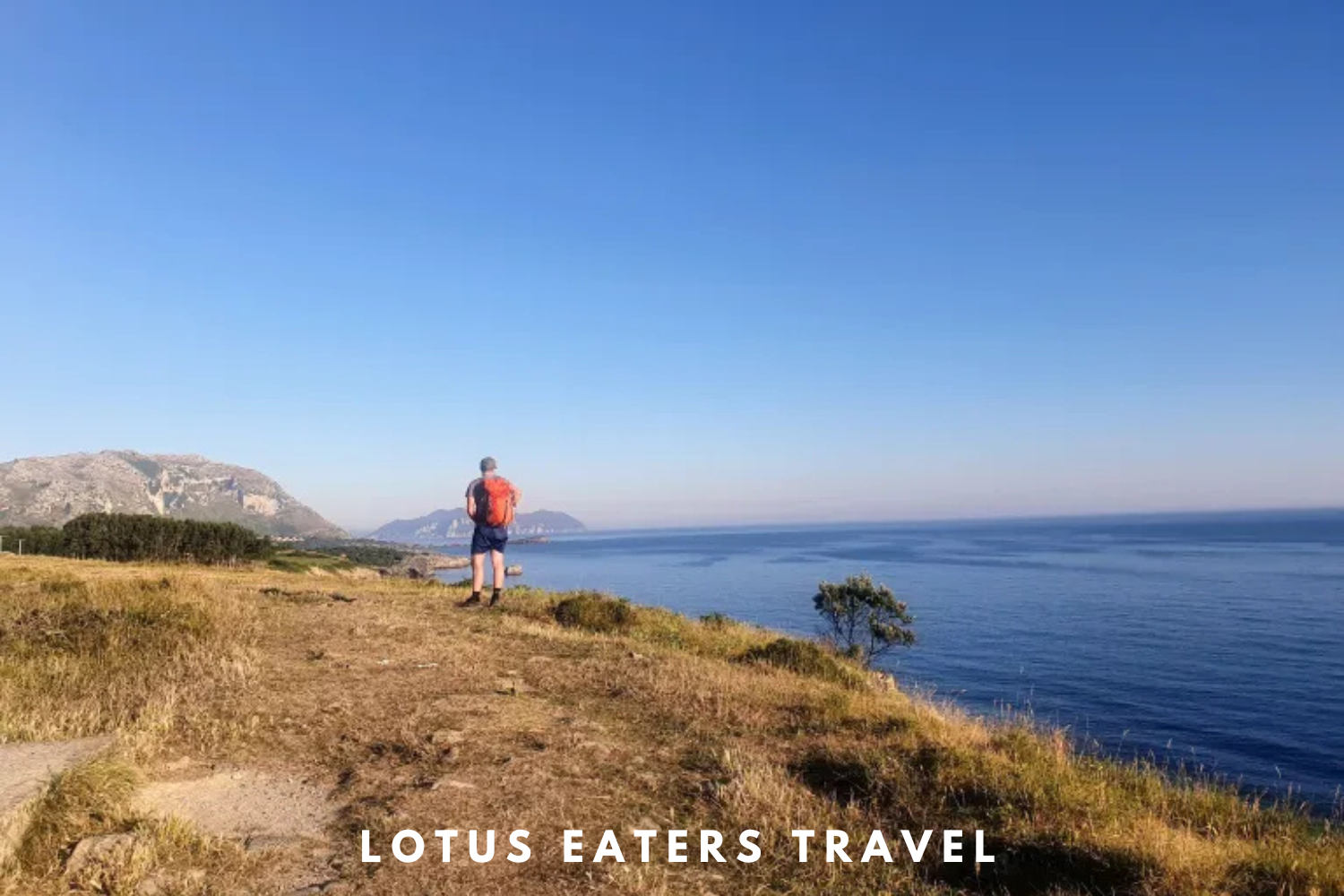
CAMINO DE SANTIAGO COASTAL ROUTES: WHAT YOU NEED TO KNOW.
One of the questions we get asked most frequently, is about the best coastal routes in Europe. And in particular, which of the Camino de Santiago routes is on the coast?
Often people assume that there’s only one coastal Camino – but in fact, there are two that follow the ocean, and even more routes that touch the coast at points.

So, if walking with the sea breeze in your face is what you’re seeking, then this guide is for you. We’ll break down the coastal Camino routes, what they offer, and how to choose the right one for you.
Which Camino Routes Are Coastal?
There are two main Camino routes that are truly coastal for most of their length:
1. Camino del Norte (The Northern Way)

The Camino del Norte hugs the northern coast of Spain, starting in the Basque Country at Irún and passing through regions like Cantabria, Asturias, and Galicia before turning inland towards Santiago de Compostela.
- Length: Approximately 825 km
- Terrain: Undulating and often challenging with frequent climbs and descents
- Landscape: Coastal cliffs, fishing villages, beaches, green hills, and mountain views
- Highlights: San Sebastián, Bilbao, Santander, Gijón, Ribadeo, and Lugo province.
There are two important things to know about this route:
Firstly, the entire route is not on the coast – there are portions along the way that briefly dip inland. Then at the end, the last 5 to 8 days or so, are all inland.
Secondly, there are often variants to the route – yellow and blue paths. The latter hug the coast tightly, whereas the yellow might miss the coast. So if you want a truly coastal experience, always pick blue.
Find our full guide to the Camino del Norte here.
2. Camino Português da Costa (Portuguese Coastal Way)

This route begins in Porto, Portugal, and follows the Atlantic coast northward, crossing into Spain before joining the central Portuguese route near Redondela.
- Length: Approximately 280 km from Porto
- Terrain: Flatter and more accessible than the Norte
- Landscape: Boardwalks, beaches, coastal towns, and river estuaries
- Highlights: Porto, Vila do Conde, Viana do Castelo, A Guarda, Baiona, Vigo
It’s also important to know that the Portuguese coastal route does have inland sections too. In fact, from Redondela to Santiago de Compostela is entirely through countryside and inland towns – that’s four days of walking away from the sea.
Find our full guide to the Portuguese Coastal Camino here.
Other Routes with Coastal Connections
While not fully coastal, several Camino routes have important coastal connections or begin/end by the sea:
Camino Inglés

The English Way starts in either Ferrol or A Coruña, both coastal cities in Galicia, and leads southward to Santiago.
- Length: Around 118 km from Ferrol or 75 km from A Coruña (only Ferrol qualifies for the Compostela without additional km)
- Landscape: Starts by the sea, then moves inland through forests and farmland
- Good for: Those looking for a short but meaningful Camino, especially with limited time
Camino Mozárabe (from Málaga or Almería)
These lesser-known routes start in the southern coastal cities of Málaga and Almería and head inland through Andalusia to join the Vía de la Plata in Mérida.
It’s worth adding, you don’t walk on the coast on this route. But the start points mean you could tag on a few days on the beach.
- Length: Around 400 km from Málaga; about 1,300 km total to Santiago
- Landscape: Coastal city start, then arid mountains, olive groves, and open plains
- Good for: Experienced pilgrims or those seeking solitude and a deeper cultural experience.
Find our full guide to the Camino Mozarabe here.
Camino Finisterre-Muxía

Not technically a route to Santiago, but rather an extension beyond it, this short trail takes pilgrims west to the ocean at Finisterre and Muxía.
- Length: 90 km (Santiago to Finisterre), with an optional 30 km to Muxía
- Highlights: Rugged Galician coast, lighthouses, Finisterre (“the end of the world”)
- Why Walk It: A fitting finale for those who want to see the sea after completing another Camino route
Find our full guide to the Camino Finisterre here.
Choosing Between the Coastal Camino Routes
Each of the coastal Caminos offers something different, depending on your interests, time, fitness level, and what kind of experience you’re looking for.
Camino del Norte: For the Adventurous and Scenic Seeker
The Norte is ideal for those who want dramatic scenery, rich cultural variety, and a challenge. The terrain can be tough, with steep climbs and long days, but you’ll be rewarded with breathtaking coastal cliffs, remote beaches, and lush green landscapes.
It’s also one of the quieter long-distance routes, though more popular in summer months. Accommodation is generally available, but can be more limited compared to the Camino Francés.
Good for: Experienced walkers, nature lovers, pilgrims who want fewer crowds, summer walking.
Portuguese Coastal Camino: For Accessibility and Sea Breezes
If you’re looking for a more accessible route with plenty of beach views, the Portuguese Coastal Way is an excellent option. The route combines traditional Camino villages with boardwalk sections right along the beach.
It’s less physically demanding than the Norte, but still offers a full and beautiful Camino experience. Many walkers choose to start in Porto and take the Senda Litoral (a variant that stays even closer to the coast) for the first few days.
Good for: First-time pilgrims, beach lovers, those wanting a mix of culture and ocean, shoulder season walking.
Camino Inglés: For a Short but Satisfying Journey
The English Way is ideal if you only have a week and still want to earn your Compostela. Though it starts by the sea, the coastal influence fades quickly. Still, it’s a peaceful and scenic route through Galicia with excellent food and fewer pilgrims.
Good for: Time-poor pilgrims, history buffs, quiet walkers
Camino Mozárabe: For History, Solitude and Southern Spain
Starting by the Mediterranean Sea, this route offers a very different side of Spain. You’ll walk through ancient Moorish cities, rural Andalusia, and eventually into the vast landscapes of central Spain. Really the only coastal bit is the start of the route – so it won’t suit you if you want to walk by the sea.
It requires more planning and stamina, but it’s a rewarding journey steeped in history and culture.
Good for: Veteran walkers, cultural travellers, lovers of remote paths
Camino Finisterre: For a Poetic Ending
If you’ve already walked to Santiago, the Camino Finisterre offers a chance to walk further west, following the ancient pagan tradition of going to the “end of the world.”
It’s a short route with dramatic ocean views and a slower, more reflective pace.
Good for: Anyone who has completed another Camino, or wants to end with the Atlantic sunset.
Alternative coastal routes
If none of these routes tickle your coastal fancy, you may want to consider either of the two hikes below.


Written by Emma
Wine Lover. Yogi. Hiker. Writer.


Do you need to book accommodation on the Camino Primitivo?
DO YOU NEED TO BOOK ACCOMMODATION ON THE CAMINO PRIMITIVO? PROS AND CONS. We walked the Camino Primitivo recently and—after much debate—decided to book all of our accommodation ahead of time. While the Primitivo is often described as one of the quieter Camino routes, that reputation is becoming outdated. Throughout the summer we saw frequent…

Taking the ferry from Laredo to Santoña: a short guide
TAKING THE FERRY FROM LAREDO TO SANTONA ON THE CAMINO DEL NORTE: A SHORT GUIDE. Walking the Camino del Norte along Spain’s northern coast brings many unique experiences. For me, one that stands out is the crossing the estuary from Laredo to Santoña by ferry. Despite being a quick journey, it’s a rare chance to…
How to Take the Pilgrim Ferry from Caminha to A Guarda (Camino Portuguese)
HOW TO TAKE THE PILGRIM FERRY FROM CAMINHA TO A GUARDA: A SHORT GUIDE. If you’re walking the Camino Portuguese Coastal Route, sooner or later you’ll reach the Minho River at Caminha and face a simple question: how do I get across to Spain? The answer, for most pilgrims, is the small tidal ferry that…
Most of our planning is done using other blogs, but you can’t beat a guide book at the bottom of your case.
Find them here on Amazon.

USEFUL LINKS FOR FLIGHTS, ACCOMMODATION AND TRANSPORT


CHECK LATEST FLIGHTS
ACTIVITIES TO CONSIDER
FOLLOW US ON SOCIAL MEDIA
Please note that some links on our website are partnered with affiliates. Using an affiliate links does not make it more expensive for you to purchase. We receive a small commission whenever you buy something which in turn allows us to keep writing independent travel guides and your support is greatly appreciated.