

THE SMALL BUT IMPORTANT THINGS NOBODY TELLS YOU ABOUT WALKING THE CAMINO DE SANTIAGO.
There are guidebooks filled with elevation charts and packing lists. You’ll find pilgrim forums dedicated to sock recommendations. And yet, the real lessons of the Camino often hide in the small stuff – the moments you only understand once you’re out there, one foot in front of the other.
After thousands of kilometres across Spain and Portugal, I’ve come to realise that it’s often the tiniest details that stay with you. Here’s what nobody tells you – but probably should.


1/This will change your life. Forever
It sounds dramatic. It even sounds a bit cliché. But the Camino has a way of slipping under your skin and quietly reshaping you. Maybe it’s the routine of daily movement, the headspace that walking creates, or the steady stripping away of distractions.
You’ll return home the same person, but just slightly recalibrated. Calmer. Clearer. More tuned in to the things that matter. My biggest takeaway – there’s less sweating the small stuff.
2/You’ll plan toilet breaks like a military strategist
When you’re walking 20km+ a day, nature calls- frequently and sometimes unpredictably. You’ll start scanning for cafés, petrol stations, or even conveniently placed hedgerows. Morning coffee becomes a calculated risk. And you’ll soon learn that “WC” signs are sacred.
Tip: always carry tissues and somewhere to store your rubbish, and never assume the next bar will be open.
You can find more info on bathrooms on the Camino here.
3/ You’ll really wonder if you made the right clothing choices
Because you’ll be living in your clothes, walking in them, eating in them, hand-washing them nightly in bathroom sinks. That pair of leggings you weren’t sure about? You’ll wear them 30 days in a row. Your shoes will become a defining part of your experience.
So test everything in advance, go for practicality over fashion, and make sure you can walk 25km in it without developing a vendetta against your own socks.
Find our detailed packing list guide here. It answers all your key packing questions.
4/A tiny bit of local language makes the day infinitely better
Just a few words – hola, bom dia, gracias – can open up conversations, spark smiles, and ease small interactions.
Locals are generally kind to pilgrims, but showing that you’ve made a bit of effort goes a long way. Plus, shouting “café con leche!” at 7am with sleepy pilgrims somehow bonds you for life.
5/Don’t plan too much, if you want to go with the flow
The Camino is unpredictable in all the best ways. You might meet someone on day three and walk together for a week. You might find a town you love and want to stay an extra night.
Booking everything in advance can lock you into a plan that doesn’t fit how your body or spirit feels that day. If you’re okay with some flexibility, leave space for the unexpected. That’s where the Camino magic usually hides.
6/ But if you’re a planner, don’t force “spontaneity“
Some of us (me) thrive on knowing where we’ll sleep. That’s okay too. If your peace of mind comes from pre-booking a bed, lean into it – just leave a little breathing room.
You don’t have to pretend to be free-spirited to “do the Camino right.” But trying to be spontaneous when you’re anxious about where you’ll stay? That defeats the point.
7/Be patient when ordering, and no, you don’t need to tip for coffee
Café culture in Spain and Portugal is gloriously slow. Sit down, wait to be noticed, and don’t expect the waiter to hover. Sometimes there’s table service, sometimes there’s not.
In many places, you’ll pay when you leave, even if you only had a small coffee. Tips are welcome for dinner, but absolutely not expected especially for basic food and drink.
8/ Your morning coffee will become an unnatural fixation

It starts as a gentle craving. Then it becomes a need. You’ll plan your first 5km of the day based on where you’ll stop for café con leche. That first sip in the early light – usually accompanied by toast and tomato – becomes a sacred ritual. A delayed caffeine hit can genuinely feel like a crisis. Accept this. Plan accordingly.
Find out more about food and drink on the Camino de Santiago here.
9/ People will bolt out of bed in the dark and yes, you’ll need to be out by 08:30
Headtorches. Zipping bags. Creaking bunks. The day starts early, especially in albergues. Even if you want to sleep in, the energy of the dorm room will say otherwise. Most albergues want pilgrims out between 8:00–8:30am. You’ll get used to it. And soon, bizarrely, you’ll start waking up before your alarm, ready to walk as the sun rises.
10/People are going to snore. Loudly
Earplugs aren’t optional – they’re a survival tool. Albergues are communal sleeping spaces, and that means sharing with snorers, farters, rustlers and wanderers.
At some point, you’ll lie awake, mildly furious. But it’s part of the package. And if you happen to be the snorer? Own it. Bring gifts. Share your chocolate.
But please, don’t be that person moaning about other people. If you want privacy, get a private room.
11/ Your world will become wonderfully communal
You’ll share plasters, shampoo, sunscreen and snacks. Someone will offer you the last banana. Someone else will offer to help when your ankle gives up.
You’ll sit at long tables and pass jugs of wine like you’ve known each other forever. The Camino reminds you that humans, when not distracted, are inherently generous. And, that person who you might never have normally spoken to – is actually wicked fun.
12/ Drying laundry becomes a full-time job


It’s science, art, and luck. You’ll start watching the weather obsessively. You’ll pin your pants to a line with mathematical precision, hoping the sun doesn’t disappear at 4pm. When it rains, you’ll start hanging clothes on bunk ladders and hoping no one knocks over your socks. Eventually, you just accept that “clean-ish and slightly damp” is the new standard.
Find our tips on how to do laundry on the Camino here.
13/There is no such thing as “just one glass of wine”


That menu del dia or pilgrim menu in your albergue often includes half a bottle – and a good chat. One glass turns into a second, and suddenly you’re discussing the meaning of life with a Dane named Erik.
The Camino brings unlikely companions together over local reds and late sunsets. Drink slowly. Remember to drink water. But mainly, laugh a lot.
14/ One good meal can fix a bad day
Sometimes it’s a crusty baguette with jamón eaten on a church step. Other times it’s a bowl of bean soup that tastes like home. When you’re tired and sunburnt, a good meal can reset your mood completely. Never underestimate the power of food on the trail, or the joy of a surprise chocolate croissant mid-hike.
15/You don’t have to talk all the time
You’ll meet kind, open people, but you don’t have to share every kilometre with someone else. Some days you’ll want solitude. Other days, you’ll talk non-stop. Both are fine. The Camino gives you permission to follow your own rhythm, and to enjoy the quiet just as much as the conversation.
And, if you don’t meet your people right away, don’t worry. There’s nothing wrong with you! Just savour the small moments of conversation that you do have. And enjoy the solitude – it isn’t something you get a chance to do much in life.
16/ WiFi will be patchy but that’s the point
Yes, you’ll find it in most albergues, but don’t rely on it. At first, this feels disorienting. Then it becomes liberating. You’ll start looking at trees instead of timelines, and clouds instead of group chats. The world will shrink in the best possible way.
And, I always recommend packing a journal for those quiet moments. Maybe a deck of cards for a quick game with a stranger. Or, if you’re an avid reader – pack your kindle or download the app to your phone for “no signal” moments.
17/ One kind word from a stranger can carry you 20km
Buen Camino! You’ll hear it constantly, from other pilgrims, from locals in aprons, from children on bikes. These words start to feel like a blessing. On tough days, a smile and a kind nod from a stranger can genuinely lift your feet and your spirits.
18/ You’ll regret it if you don’t stay in at least one albergue
Yes, they’re noisy. Yes, someone will definitely snore. But they’re also the beating heart of the Camino. Even if you usually prefer private rooms, try at least one albergue. Share the space, the stories, the laughter. It’s messy, human, and weirdly comforting.
19/ You’ll miss it the moment it’s over
Not the blisters, maybe. But the simplicity. The daily rhythm. The unexpected friendships. Walking all day and knowing exactly where you’re meant to bd, there’s something powerful in that. Once home, you’ll look at your hiking shoes and feel something tug at your chest. You’ll want to go back. And chances are, you will.
Written by Emma
Wine Lover. Yogi. Hiker. Writer.
British travel writer and long-distance hiker, native to Kent. Emma has walked the Camino de Santiago more than ten times, completed trails across Europe from the Corfu Trail to the Fisherman’s Trail, and covered thousands of kilometres on foot. She always writes from first-hand experience. Her goal? Inspire just one person to go on their first long-distance hike.


The Camino Portuguese (Coastal route): what we liked + didn’t like
THE CAMINO PORTUGUESE (COASTAL ROUTE): WHAT WE LIKED + DIDN’T LIKE. I first walked the Camino Portuguese Coastal route in March 2024. In late 2026, I returned to the route. The first time, I walked a few days with my mother, and the rest solo. This time around, John and I walked together. We don’t…

A short guide to taking the pilgrim boat on the Camino Spiritual Variant
A SHORT GUIDE TO TAKING THE PILGRIM BOAT ON THE CAMINO SPIRITUAL VARIANT. I will admit, I made a bit of a mistake when it came to arranging our journey on the pilgrim boat from Vilanova de Arousa to Pontecesures. There are two companies operating the route: one has a larger, more comfortable vessel, while…
The Spiritual Variant of the Camino Portuguese: all you need to know
THE SPIRITUAL VARIANT OF THE CAMINO PORTUGUESE: ALL YOU NEED TO KNOW. A bit of a spoiler alert, but the Spiritual Variant for us was, a highlight of the entire walk. We’d been walking the Camino Portuguese Coastal Route, joining the Central Route in Redondela, and by the time we reached Pontevedra, we were ready…
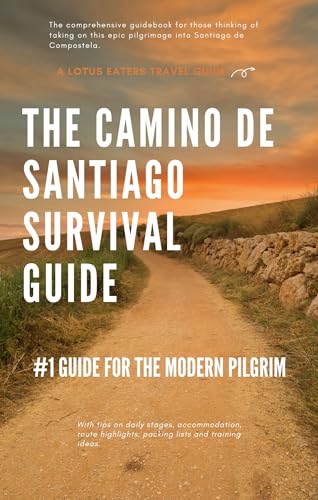
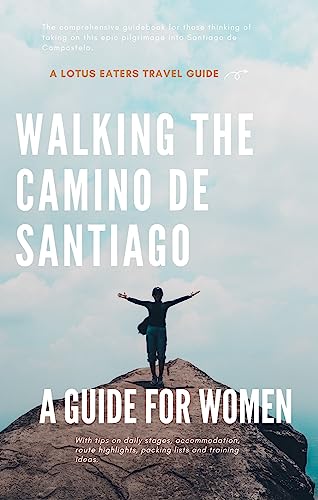
Most of our planning is done using other blogs, but you can’t beat a guide book at the bottom of your case.
Find them here on Amazon.

USEFUL LINKS FOR FLIGHTS, ACCOMMODATION AND TRANSPORT


FOLLOW US ON SOCIAL MEDIA
Please note that some links on our website are partnered with affiliates. Using an affiliate links does not make it more expensive for you to purchase. We receive a small commission whenever you buy something which in turn allows us to keep writing independent travel guides and your support is greatly appreciated.