
11 OF THE BEST ALBERGUES ON THE CAMINO PRIMITIVO.
The Camino Primitivo might be known as the most beautiful of all the Camino routes – but it’s also one of the toughest. After long climbs and rocky descents, where you sleep each night can make a big difference to how much you enjoy it.
We’ve walked several Camino routes, but one of the things that stood out most on the Primitivo was the quality and character of its albergues. Many are small, family-run, and full of warmth. Others are memorable for their top notch facilities.
Here are the standout albergues from our own Camino Primitivo journey, from Oviedo through to Lugo.
1/ Grado – La Quintana Hostel


A brilliant first night on the Primitivo. La Quintana Hostel is set in a grand old Asturian house with a bar and big garden. The owners are welcoming, the beds are comfortable, and there’s a real sense of arrival as pilgrims trickle in throughout the afternoon.
It’s a great place to have a chit chat over a cold beer on the terrace after the first full day of walking. Dinner and breakfast are available, though we opted to eat out in town.
The only slight oddity about this albergue, is the communal showers. But, on the bright side – we never had to queue to use them.
Tip: Grado is popular for the first night – worth booking in advance.
Day: For us this was day one.
Book: Directly on the albergue website.
2/ Bolgues – Villa Palatina


A few kms before Grado, Villa Palatina is one of the Primitivo’s most renowned albergues. It’s part farmhouse, part mini-paradise – complete with a swimming pool and gardens.
There’s an onsite bar/ restaurant, so it’s one of those lovely albergues that you can check into and not need to leave until the next morning. Private rooms and dorm rooms are available.
Even if it makes for a slightly shorter day’s walk, Villa Palatina is well worth the stop.
Day: For most this would be day one. An alternative stay to Grado.
Book: On booking.com.
3/ Casazorrina – La Figal de Xugabolos


We chose to stop in Casazorrina instead of pushing on to Salas, mainly to experience La Figal de Xugabolos- a small, rural albergue that has developed something of a reputation among pilgrims.
It’s more like staying in a boutique hotel than an albergue. There are private rooms as well as dorms available – for couples, I’d recommend the private rooms, which make the experience a little more romantic.
It’s undeniably beautiful, with lovely gardens and a peaceful setting. We were slightly underwhelmed by the dinner (which felt overpriced for the portions) and found the dorms a little tight on space, but overall it was a pleasant and restful stay.
Tip: The check in time is a little late – 16:00. But you can arrive earlier and hangout in the garden or in the bar area. They also serve lunch.
Day: For this was day two from Oviedo.
Book: Via booking.com
4/ Salas – Casa Sueño


If you’re looking for a boutique, intimate stop, Casa Sueño in Salas is a fantastic option. Just on the outskirts of town, the albergue is housed inside a modern out building, with a glass front. The garden is large with seats to lounge in.
We didn’t stay in this albergue (which is a regret), but it comes highly recommended. We spoke with many pilgrims who stayed here and had made friends during their stay – it seems to be quite a sociable spot.
And if you arrive on a sunny day, I can’t think of many better places to enjoy a beer.
Day: For most, this would be the end of day two.
Book: On booking.com
5/ Bodenaya – Albergue de Bodenaya


Even though we didn’t stay in this albergue this time around, I wanted to include it on the list. Every Camino route has it’s “legend” of an albergue and I think Bodenaya is that for the Primitivo.
Think, communal dinner, cosy spaces and a little bit of a spiritual vibe.
Day: For most, this would be day two or three.
Book: Contact the albergue directly – contact details on Google Maps.
6/ Tineo – Albergue Palacio de Merás


Hidden beneath a four-star hotel, this is one of the most comfortable albergues on the entire route. Staying here feels like getting a small taste of luxury without the price tag.
Pilgrims sleep in large dorms below the elegant Palacio de Merás Hotel, with a generous breakfast included. Clean, quiet, and ideally located in the centre of town, it’s an easy favourite.
We particularly loved the bathrooms (possibly the smartest I’ve ever seen in an albergue). There are curtained cubby holes with two bunk beds in, making it feel like a private space. And actually, because there are so many bunks, it’s possible to end up with a cubby between only two people.
Day: For most, this would be day three or four.
Book: Private rooms “upstairs” on booking.com, dorm beds “donstairs” via their website.
You can find our full guide to visiting Tineo here.
7/ Pola de Allande – La Casita de Aba


A true highlight of the Primitivo. From the moment we were welcomed with glasses of homemade lemonade, we knew we’d found a gem.
La Casita de Aba is spotless, thoughtfully designed, and run with genuine care. The hosts treat pilgrims like old friends. There’s a kitchen and comfortable beds with crisp linen, everything you crave after the long descent into Pola.
Day: For us, this was the end of day four.
Book: Directly on their website.
8/ La Mesa – Albergue Miguelín


Many pilgrims stop in Berducedo, but we decided to continue to La Mesa and stay at Albergue Miguelín – a decision we didn’t regret.
Perched in a quiet mountain village, Miguelín has a friendly bar, a decent pilgrim menu (or a la carte options), and a relaxed outdoor area that’s perfect for a post-walk drink. The staff are kind, and there’s a good mix of dorms and private rooms.
It could do with a little refresh in places, and the swimming pool was more “green lagoon” than “inviting dip” when we were there, but overall it’s a comfortable and welcoming stop.
Day: For us, this was day the end of day five.
Book: We booked via email – contact details on Google Maps.
9/ O Piñeiral – Albergue O Piñeiral


Crossing into Galicia, we stayed at Albergue O Piñeiral – a modern, well-run albergue surrounded by greenery.
There are both dorms and private rooms, plus a small spa area with a hot tub for tired legs. Dinner is excellent (though served on the later side at 8:30 p.m.), and the atmosphere is sociable but calm.
After a long, wet day on the trail, it was exactly what we needed – warm, clean, and restorative.
Day: For us, this was the end of day seven.
Tip: The bar opens early for coffee next day. We chose to skip breakfast (€8 for a buffet), and waited until the Taberna a few kms away which serves excellent tortilla.
Book: You can secure private rooms on booking.com or book dorm space on their website.
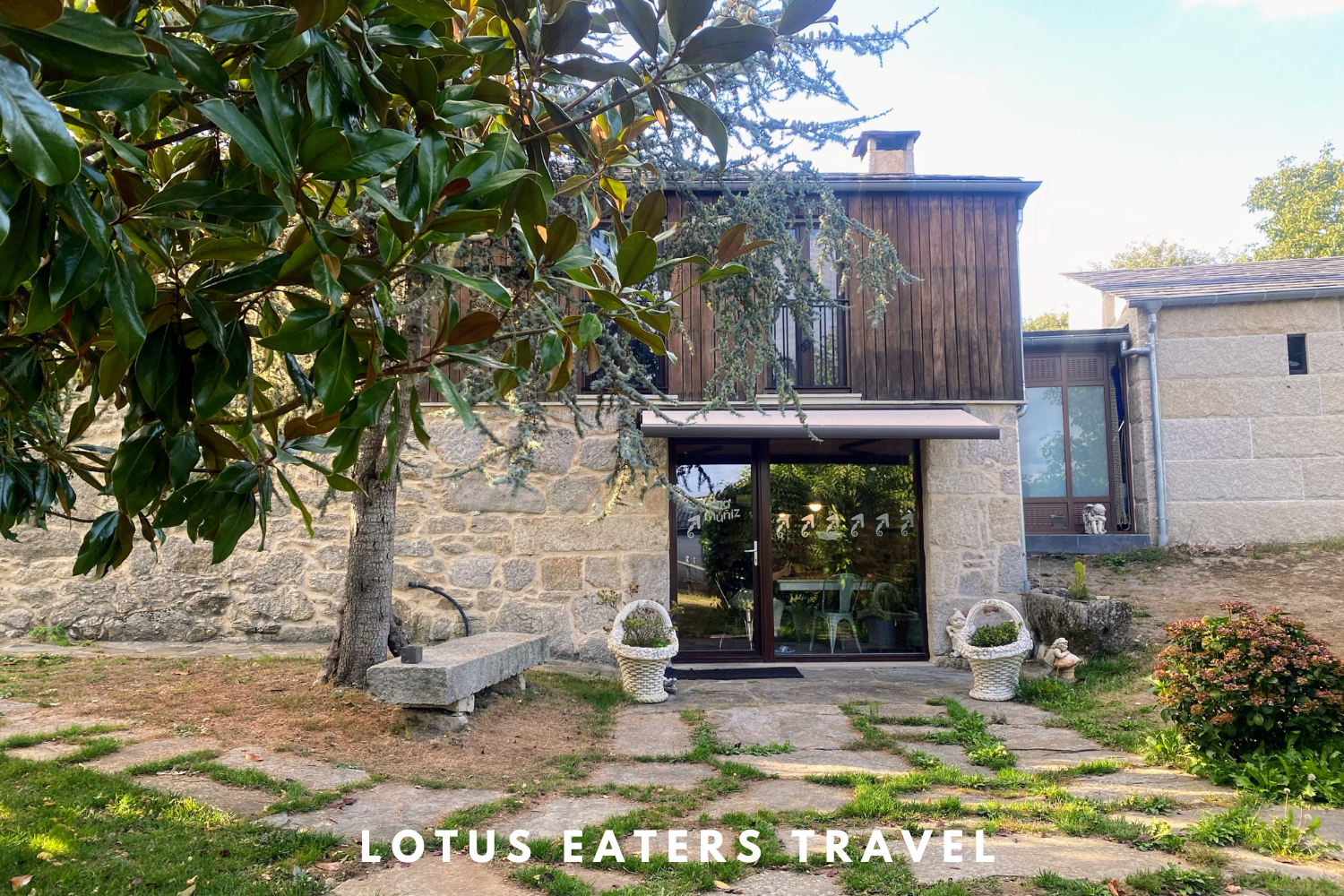
10/ Vilar de Cas – A Pociña de Muñiz


A Pociña de Muñiz is the kind of albergue that becomes the heart of your Camino. Run by generous hosts who cook huge communal dinners and pour endless wine.


The dorms and private rooms are beautifully maintained, the gardens are full of hammocks, and the atmosphere is pure joy.
I loved all the amazing thoughtful touches – like this hanging bag to put your bits/ water bottle at night. I am invariably in the top bunk when we walk and I hate not having anywhere to put my things!

It’s worth planning your stages around staying here – even if it means a longer day’s walk to get there.
Day: For us, this was the end of day eight.
Book: You can book private and dorm spaces on their website.
11/ Lugo – Hostel Porton

Lugo makes for an excellent rest stop, and Hostel Porton is a great base. It’s central, comfortable, and just steps from the tapas bars inside the Roman walls. There’s also a massive bar in the hostel, so you don’t have to leave if you don’t want to!


Private rooms are inexpensive and quiet- ideal for a night of proper rest before the final stretch to Santiago.
Day: For us, this was the end of day nine.
Book: Via booking.com.
More Camino Primitivo content

You can find more detailed guides for the Camino Primitivo below:
- How difficult is the Camino Primitivo
- Camino Primitivo Daily Stages
- Do you need a rest day on the Camino Primitivo?
- Best towns on the Camino Primitivo
- Lugo: A city guide

Would you like us to plan your walk for you?
Embark on a journey of a lifetime with Lotus Eaters Travel Planning, where we turn your dream of long-distance walking into a meticulously planned reality.
Our passion for exploration, love for diverse cultures, and commitment to providing an unparalleled experience drive us to offer personalized consultation services for some of the world’s most iconic walking trails
Written by Emma
Wine Lover. Yogi. Hiker. Writer.


Do you need to book accommodation on the Camino Primitivo?
DO YOU NEED TO BOOK ACCOMMODATION ON THE CAMINO PRIMITIVO? PROS AND CONS. We walked the Camino Primitivo recently and after much debate, decided to book all of our accommodation ahead of time. While the Primitivo is often described as one of the quieter Camino routes, that reputation is becoming outdated. Throughout the summer we…

Taking the ferry from Laredo to Santoña: a short guide
TAKING THE FERRY FROM LAREDO TO SANTONA ON THE CAMINO DEL NORTE: A SHORT GUIDE. Walking the Camino del Norte along Spain’s northern coast brings many unique experiences. For me, one that stands out is the crossing the estuary from Laredo to Santoña by ferry. Despite being a quick journey, it’s a rare chance to…
How to Take the Pilgrim Ferry from Caminha to A Guarda (Camino Portuguese)
HOW TO TAKE THE PILGRIM FERRY FROM CAMINHA TO A GUARDA: A SHORT GUIDE. If you’re walking the Camino Portuguese Coastal Route, sooner or later you’ll reach the Minho River at Caminha and face a simple question: how do I get across to Spain? The answer, for most pilgrims, is the small tidal ferry that…
Most of our planning is done using other blogs, but you can’t beat a guide book at the bottom of your case.
Find them here on Amazon.

USEFUL LINKS FOR FLIGHTS, ACCOMMODATION AND TRANSPORT


CHECK LATEST FLIGHTS
ACTIVITIES TO CONSIDER
FOLLOW US ON SOCIAL MEDIA
Please note that some links on our website are partnered with affiliates. Using an affiliate links does not make it more expensive for you to purchase. We receive a small commission whenever you buy something which in turn allows us to keep writing independent travel guides and your support is greatly appreciated.