
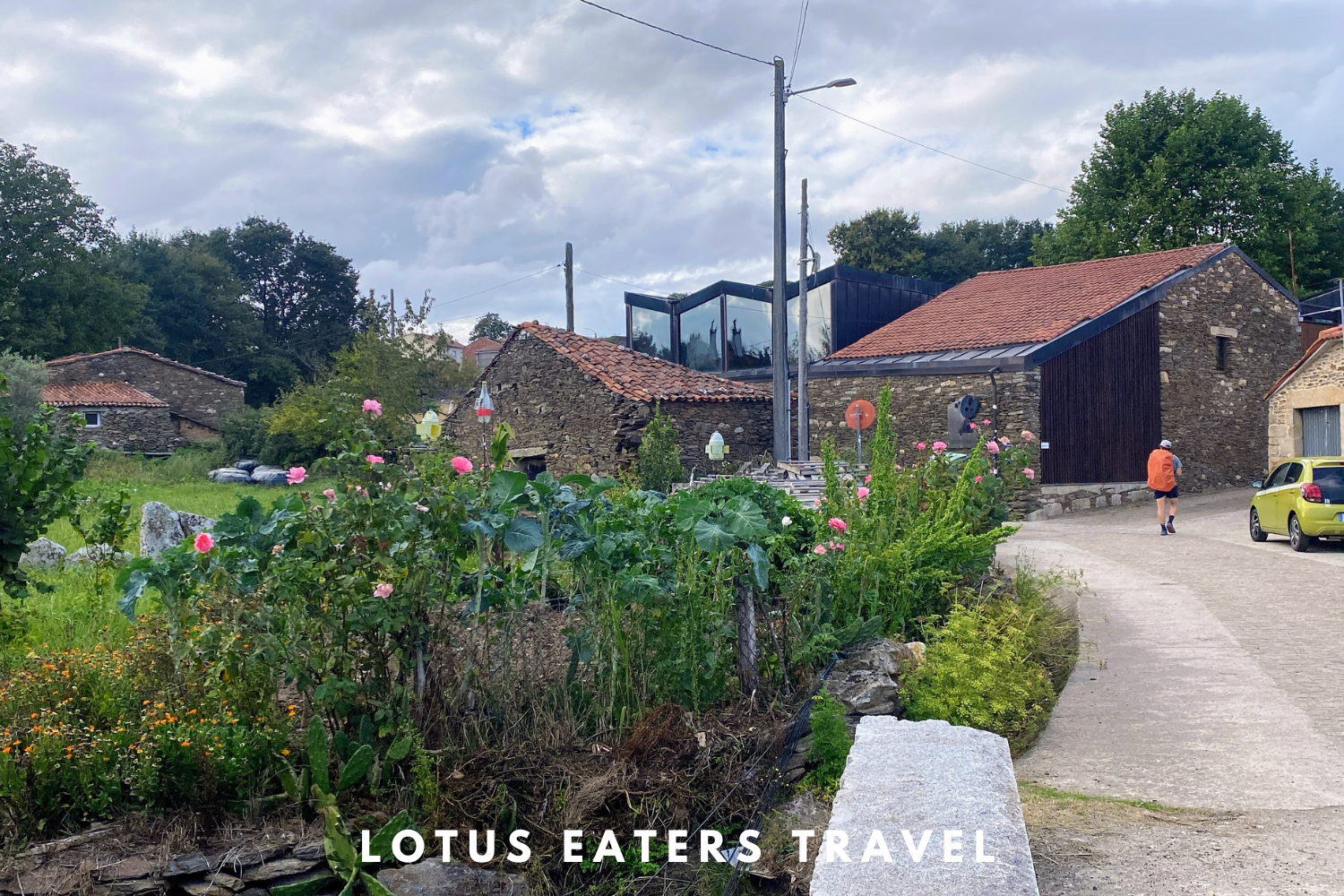
WHAT TO EXPECT FROM MUNICIPAL ALBERGUES ON THE CAMINO DE SANTIAGO.
Municipal albergues are the backbone of the Camino de Santiago. These public hostels are simple, no-frills places where pilgrims sleep, eat, and rest between stages. They’re not luxurious, but they’re reliable, affordable, and tend to be full of fellow walkers, making them an essential part of the Camino experience.
I’ve lost count of how many we have stayed in over the years. Every municipal albergue is different, but there are also lots of things that you can expect to see in each one – the familiar comfort of the blue mattresses, for one thing.


Knowing what to expect – from bunk beds to communal kitchens – can make your stay smoother and help you plan each day with a little less guesswork.
What are municipal albergues?


Municipal albergues are publicly run hostels specifically for pilgrims. They tend to be run by the local governments or bodies in each municipality.
Think of them as simple, functional places for walkers who need a bed, a shower, and a chance to connect with fellow pilgrims. Unlike private albergues or hotels, municipal albergues are bare-bones but reliable, offering everything you need to recharge before the next day’s walk.
We’ve been saved by municipal albergues many a time, when there has been no other accommodation available. And, whilst sometimes I dread staying in them, I’ve never had a genuinely bad experience.
Which Camino routes have municipal albergues?


Almost every Camino route in Spain offers municipal albergues, though the density varies. The Camino Frances has the most, because more people walk this route.
Other routes, like the Camino Portuguse, Camino del Norte, and the Via de la Plata, also offer municipal options, though you might find longer stretches between them, especially on less-travelled paths.
Some of the best municipal albergues (in our opinion) are in Galicia. Nearly every major town on the different Camino routes have municipal albergues. And usually, they offer good facilities – we stayed in some on the Camino Sanabres that blew our minds (gorgeous spaces with incredible views).
Some of the quirkiest and most homely municipal albergues we stayed in were on the Camino Mozarabe, in southern Spain. We were sometimes offered home cooked meals by volunteer hosts. Whilst other albergues were unmanned – offering a really different experience.
Who can stay in a Municipal Albergue?

Strictly speaking, Municipal Albergues are only for those on the Camino de Santiago – whether walking or cycling. You will be required to show both your passport/ ID document and your Pilgrim credential when you enter the albergue (or later, once the host comes to check you in.)
Other than that, there are no restrictions, age limits or any kind of rules about who can stay.
I’ve heard some people say that Municipal Albergues are for “proper pilgrims,” whilst “tourists” (referring to people not walking for spiritual reasons or those only walking a short distance), should stay in private accommodation. This is absolutely not the case! Whatever your reasoning for walking the Camino, you are allowed to stay in municipal albergues.
Personally, we will often choose to stay in private rather than public albergues on busy Camino routes. There are two reasons for this – firstly, we don’t want to race for beds (municipal albergues operate on a first come first served basis.) Secondly, we are very conscious that some walkers do not have the budget to stay in private accommodation and it doesn’t feel fair (to us) to take space from them. But, this is very much a personal perspective that we would never wish to impose on anyone else.
Tip – For cyclists – it’s important to check whether the albergue can accommodate you (and your vehicle), not all of them do.
What to expect from municipal albergues on the Camino de Santiago
If you’ve never stayed in a Municipal Albergue, it can be a bit of a mystery.
Here are 13 things to know before you stay.
1/ No booking

Municipal albergues operate on a first-come, first-served basis. There’s no reserving in advance, which means arriving early in the day is key during peak season and on busy routes.
On the bright side – you’ll meet plenty of other pilgrims, and the camaraderie often starts while waiting in line for your bed.
Usually, there is a host (hospitalero) to check you in. Either at the point that the hostel opens, or later in the evening.
2/ Bunk beds


Expect dormitory-style sleeping arrangements with bunk beds. The size of municipal albergues and the bedrooms can vary – we’ve stayed in some with 40 beds, and others with just 2. But it’s probably most common to see large rooms with 20 or so bunk beds (sleeping 40 people).
3/ Disposable sheets
Many municipal albergues provide a thin papery/plastic sheet to cover your mattress and pillow. Occasionally, we have had to pay a small amount (€1.50 or so) for these.
Pillows are always provided. As are mattresses. We have stayed in a couple of municipal albergues (on the Camino Mozarabe), which supplied proper bedding, including a duvet (luxury!). But most don’t offer any bedding, or may have a wool blanket.
You can find out more about when and why you should pack a sleeping bag on the Camino here.
4/ Kitchen facilities
Most municipal albergues have a communal kitchen where you can cook or prepare simple meals. It’s a lovely way to save money and meet other pilgrims.
Keep in mind that many do not have utensils or cooking equipment. But, invariably there is a fridge and sink.
5/ Laundry facilities


Laundry facilities vary – some municipal albergues have washing machines, others just a sink and a line to hang clothes (sometimes indoors, sometimes outdoors.) Either way, drying your gear overnight is usually possible, though it can be slower in cooler or wetter regions.
6/ Bathrooms
Bathrooms are communal and usually shared with everyone in the building. Showers are included, often hot, but don’t expect luxury. More often than not, bathroom facilities are divided into male and female spaces.
Sometimes private albergues will have towels or shower gel. This is never the case in municipal albergues, so you’ll need to pack everything.
Find our packing list for the Camino de Santiago here.
7/ Communal space


Municipal albergues often have a shared dining area and sometimes a garden, or a tatty sofa to sit on. But this isn’t always the case. We’ve stayed in some tiny municipal albergues which are just a simple bedroom and bathroom situation.
8/ Cost
Municipal albergues are the most affordable accommodation on the Camino. Typically, the charge to stay in them as of 2025 is €10.
Payment is usually in cash – so it’s best to have some notes.
Note – some municipal albergues operate on a donation basis. Although this is less common. The guide price for one person is €10. But of course, you should pay what you can.
9/ Open seasonally
Many municipal albergues are not open year round. You can expect them to close from November/ December through to January/ February. Check and plan ahead before you walk – each albergue will be different.
10/ Pilgrim credential required
Almost all municipal albergues require your pilgrim credential (credencial) to stay. It’s your passport for the Camino, stamped at each stop along the way. Without it, you might be turned away, so keep it handy.
11/ Check-in/out times
Municipal albergues often have strict opening hours. Check-in usually starts around 1–2pm and closes by 10pm. And there will be no lazing about in the morning, normally you must leave by 8am – 8:30.
12/ Heating & Comfort

Comfort is basic. The mattresses are not the best and sometimes beds squeak. Heating doesn’t always work well and some are unheated. And don’t expect air-conditioning in the summer – the best you can hope for is a window or door open.
13/ Rules & Etiquette


Municipal albergues have unspoken (and sometimes posted) rules. Keep your shoes off in dorms, don’t put bags on beds, tidy up after using the kitchen, and respect quiet hours – usually after 10pm.
Want a closer glimpse?
If you’d like to see a little more of municipal albergues – you can find our video of the Camino Sanabres below. Here, we stayed in three different municipal albergues.

Would you like us to plan your walk for you?
Embark on a journey of a lifetime with Lotus Eaters Travel Planning, where we turn your dream of long-distance walking into a meticulously planned reality.
Our passion for exploration, love for diverse cultures, and commitment to providing an unparalleled experience drive us to offer personalized consultation services for some of the world’s most iconic walking trails
Written by Emma
Wine Lover. Yogi. Hiker. Writer.


Everything you need to know about walking the Via de la Plata
EVERYTHING YOU NEED TO KNOW ABOUT WALKING THE VIA DE LA PLATA. The Via de la Plata is one of the longest and quietest Camino routes in Spain. It offers a very different experience to the more popular northern paths, with wide open landscapes, long stretches of solitude, and a slower, more traditional rhythm of…

Via de la Plata stages: Merida to Salamanca
VIA DE LA PLATA STAGES: MERIDA TO SALAMANCA. Walking the Via de la Plata from Mérida to Salamanca is one of the most memorable sections of this historic Camino route. Over nearly 300 kilometres, pilgrims pass through the quiet landscapes of Extremadura before gradually entering the hillier terrain of Castilla y León. Roman ruins, wide…
Where to get your Camino credential in Sevilla + FAQ’s about starting there
WHERE TO GET YOUR CAMINO CREDENTIAL IN SEVILLA + FAQ’s ABOUT STARTING THE VIA DE LA PLATA THERE. If you are starting the Via de la Plata in Sevilla, one of the first things you will need is a Camino credential (pilgrim passport). This small booklet records your journey as you walk to Santiago de…
Most of our planning is done using other blogs, but you can’t beat a guide book at the bottom of your case.
Find them here on Amazon.

USEFUL LINKS FOR FLIGHTS, ACCOMMODATION AND TRANSPORT


FOLLOW US ON SOCIAL MEDIA
Please note that some links on our website are partnered with affiliates. Using an affiliate links does not make it more expensive for you to purchase. We receive a small commission whenever you buy something which in turn allows us to keep writing independent travel guides and your support is greatly appreciated.