
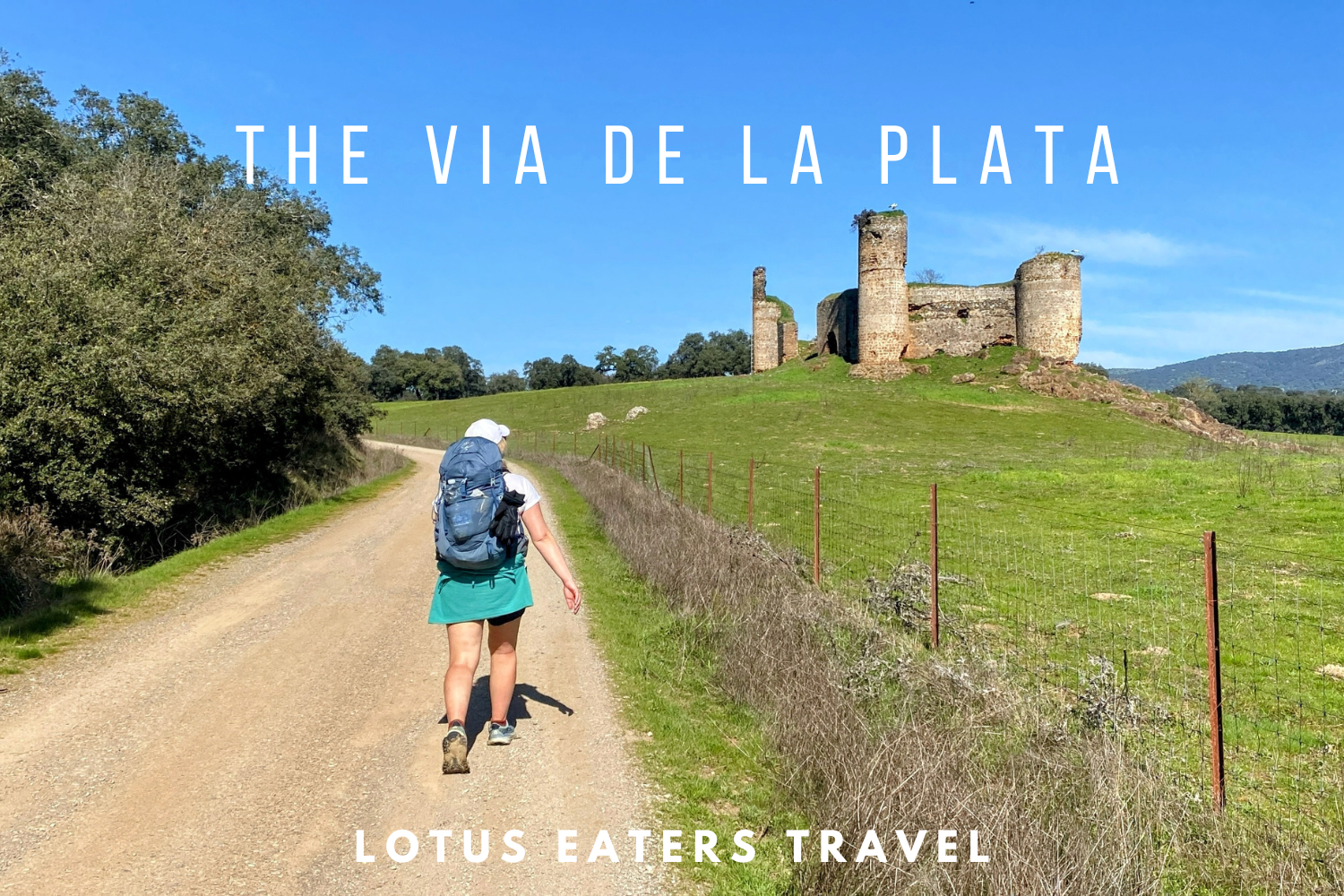
WHAT IS THE VIA DE LA PLATA LIKE? 11 WAYS THAT I WAS WRONG ABOUT THE VIA DE LA PLATA.
I have a confession. When we decided to walk the Vía de la Plata earlier this year, I was excited. But if I am entirely honest, probably not as excited as I was about walking other Camino routes, such as the Camino Primitivo.
It is probably quite telling that we have walked all of the main Camino routes, and a few niche ones like the Camino Mozárabe, in the last few years. But we had always overlooked the Vía de la Plata.

I had this idea that the route would be flat as a pancake. When I thought about it, I imagined us walking one long dusty trail after another, with the sun beating over our heads and not a bit of greenery in sight. In my mind it just looked quite brown.
I am so pleased that I did not let this preconception put me off, because the vast majority of my ideas about what the Vía de la Plata would look like were completely wrong.
Here are eleven ways I got it wrong and what you can expect on the route.
1/ There are trees

This might sound silly, but you can expect to see plenty of wonderful tree life on the Vía de la Plata.
When I posted some pictures from our walk on one of the Vía de la Plata Facebook groups, a few people commented on their surprise at seeing so many trees. Clearly I was not the only one with this misconception.
In Extremadura, you will walk through areas known as dehesa. This is a traditional landscape of open countryside planted with mature oak trees. These landscapes support a rich ecosystem and provide grazing for livestock.
Most famously, these oak groves are where Iberian pigs roam freely, feeding on fallen acorns that give jamón ibérico its distinctive flavour.
Walking through these quiet oak pastures was one of the unexpected pleasures of the route.
2/ The scenery is not bland


It should go without saying, but the scenery is absolutely not homogenous. And it is certainly not bland.
Yes, there is a little more farmland than on some northern Camino routes. But the Vía de la Plata has something quite unique. It travels from south to north across a huge stretch of Spain.
The route begins in Seville, passes through Extremadura, continues into Castile and León and eventually reaches Galicia.
Each region has its own landscape, architecture and culture. The changes are gradual but very noticeable when you experience them on foot.
3/ The albergues are excellent


The Vía de la Plata has a reputation for being a challenging walk because of the lack of infrastructure.
It is true that there are sometimes long sections without accommodation. Occasionally there can be stretches of around 30 km between towns.
However, for the most part albergues are easy to come by and offer a surprising amount of variety.
We stayed in municipal albergues, donativos and inexpensive private hostels along the way. There are also religious albergues, such as the one in Alcuéscar.
Some stops are well known among pilgrims, including the parish albergue in Fuenterroble de Salvatierra, which has around 70 beds and a reputation for a warm welcome.
4/ I wanted to walk the whole thing


This time we walked about 500 km of the route, starting in Seville and finishing in Salamanca.
The Vía de la Plata is well suited to walking in sections. Many people choose popular stretches such as Mérida to Salamanca.
I had not expected to feel quite so sad about finishing in Salamanca, but I really was.
We met plenty of people who were continuing on to Santiago de Compostela. I have to admit that I felt a little envious. I had not tired of walking at all by the time we reached Salamanca.
5/ We met people


The Vía de la Plata attracts walkers who want to escape the crowds of routes like the Camino Francés.
The route is long and the walking season is extended, which means pilgrims are spread out.
That does mean you will meet fewer people. But it does not mean you will meet no one.
There were a few days when we did not see another walker on the trail. On other days we arrived at albergues to find five or six pilgrims already there.
Because there were fewer people, we often spent more time chatting to the walkers we did meet. Some preferred to follow their own path quietly, while others were happy to share a beer and conversation in the evening.
6/ It is one of the cheapest Camino routes


Another pleasant surprise was how affordable the route can be.
We regularly paid around €3 per person for coffee and breakfast, about €10 for an albergue, and around €12 for a menú del día.
Supermarkets appear regularly along the route, making it easy to buy food and prepare your own lunches.
Because many of the bars and restaurants serve local communities rather than tourists, the prices feel refreshingly reasonable.
7/ The cities are amazing


One of the highlights of the Vía de la Plata is the number of beautiful historic cities you pass through.
You begin in the vibrant city of Seville. Then there is Mérida, famous for its extraordinary Roman heritage.
You pass through the wonderfully preserved medieval centre of Cáceres and the charming town of Zafra.
Finally, there is the magnificent university city of Salamanca.
After Salamanca, pilgrims can continue towards Astorga to join the Camino Francés, or head west towards Ourense on the Camino Sanabrés.
8/ It is not a cultural wasteland


Another misconception I had was that the route might feel culturally sparse. In reality, it is full of history.
The Vía de la Plata follows an ancient Roman road, and traces of that past appear everywhere. Roman bridges can still be seen in places like Mérida, Salamanca and Zamora.
Roman milestones still stand beside parts of the route, marking distances much as they did two thousand years ago.
You also pass walled towns, medieval streets and countless churches, convents and cathedrals.
9/ It can be walked at times when other routes can’t


The Vía de la Plata has one of the longest walking seasons of all the Camino routes.
Many albergues remain open all year, while others close only during the quietest winter months.
We walked in February and enjoyed pleasant weather for much of the journey. This is something that cannot always be said for northern routes during the same period.
That said, I would strongly avoid walking the route in the height of summer. Large sections offer very little shade, and the heat in southern Spain could make the walk dangerous.
10/ It’s not totally flat

Another assumption I had was that the route would be almost completely flat. It is not.
While it does not have the dramatic mountain climbs of the Camino Primitivo, there are plenty of smaller ascents along the way. As you move further north into Castile and León, the terrain becomes noticeably more varied.
11/ The food has variety


A few years ago I met a couple who had walked the route, and they mentioned that they eventually became bored with the food.
That was not our experience at all.
One of the joys of walking such a long north to south route is that the cuisine gradually changes.
In Andalusia you will often start the day with toasted bread, olive oil and tomato. In Extremadura you find hearty regional dishes and excellent cured meats.
By the time you reach Salamanca you will find lively bars serving excellent pintxos.
In Galicia, the food becomes more rustic, with soups, stews and grilled meats.
Even the wines change as you walk north, with local varieties appearing along the route including Verdejo and wines from nearby Ribera del Duero.
Written by Emma
Wine Lover. Yogi. Hiker. Writer.


Via de la Plata Stages: Sevilla to Merida
VIA DE LA PLATA STAGES: SEVILLA TO MERIDA. The Via de la Plata begins in the beautiful Andalusian city of Seville and heads north across Spain, eventually joining either the Camino Francés or the Camino Sanabrés on the way to Santiago de Compostela. The opening section from Seville to the Roman city of Mérida covers…

18 best long distance hikes in Europe for June
18 BEST LONG DISTANCE HIKES IN EUROPE FOR JUNE. June is one of the very best months for hiking in Europe. Summer has arrived, the days are long, and most trails are finally free of winter snow. But, if you head out for a long distance hike in Europe, you’ll be beating the crowds of…
Do you need to book accommodation on the Camino Primitivo?
DO YOU NEED TO BOOK ACCOMMODATION ON THE CAMINO PRIMITIVO? PROS AND CONS. We walked the Camino Primitivo recently and after much debate, decided to book all of our accommodation ahead of time. While the Primitivo is often described as one of the quieter Camino routes, that reputation is becoming outdated. Throughout the summer we…
Most of our planning is done using other blogs, but you can’t beat a guide book at the bottom of your case.
Find them here on Amazon.

USEFUL LINKS FOR FLIGHTS, ACCOMMODATION AND TRANSPORT


CHECK LATEST FLIGHTS
ACTIVITIES TO CONSIDER
FOLLOW US ON SOCIAL MEDIA
Please note that some links on our website are partnered with affiliates. Using an affiliate links does not make it more expensive for you to purchase. We receive a small commission whenever you buy something which in turn allows us to keep writing independent travel guides and your support is greatly appreciated.