
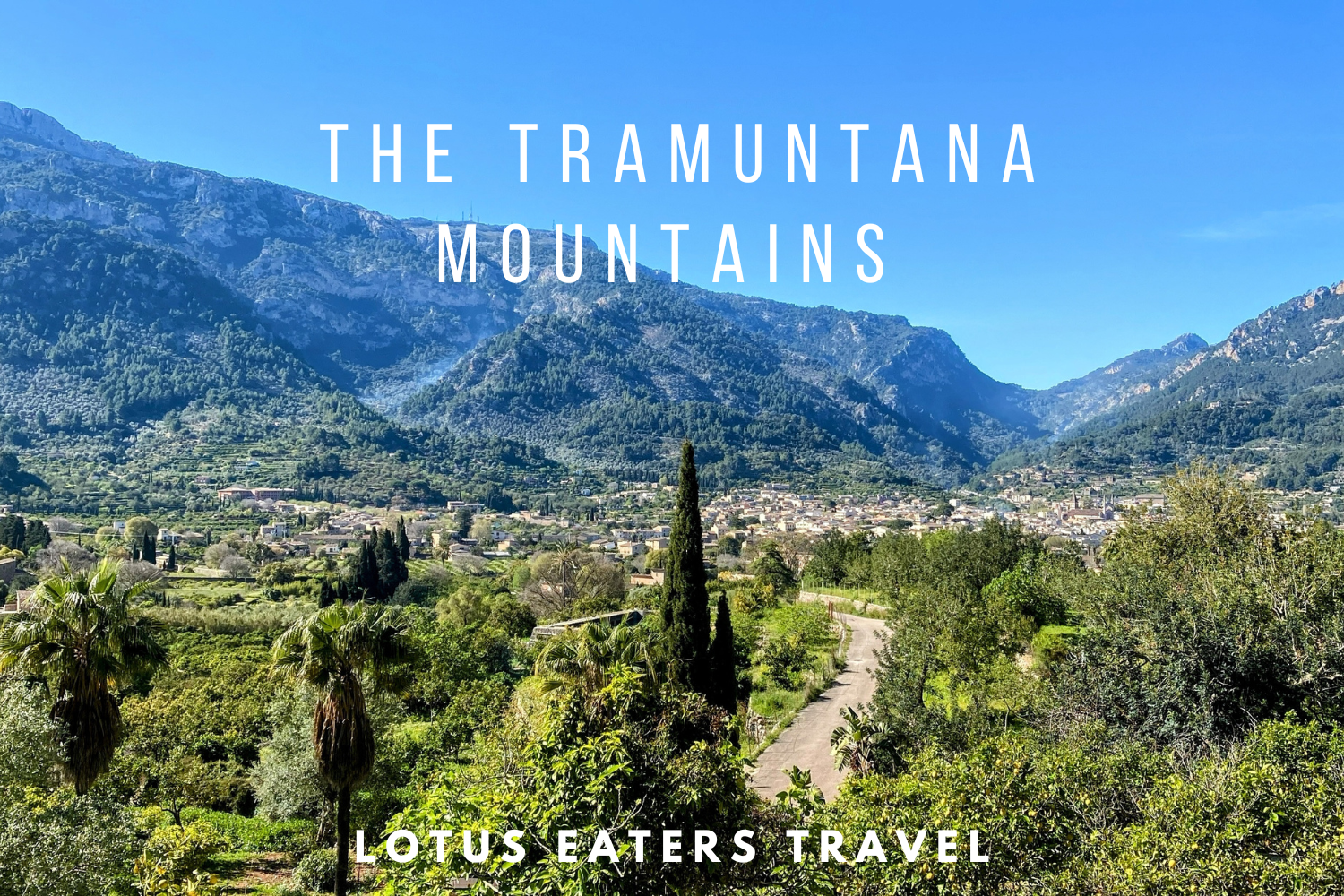
10 BEST VILLAGES TO VISIT IN THE TRAMUNTANA MOUNTAINS.
We recently spent a couple of weeks walking through Mallorca’s Serra de Tramuntana and completely fell in love with the region.
Whenever we travel somewhere known for its beaches and busy resorts, we naturally find ourselves drawn inland, towards the mountains. It’s often there that we discover the places that stay with us longest, from the quiet villages of the Troodos Mountains in Cyprus to the hilltop streets of Sutera in Sicily.
So, when we planned our trip to Mallorca, exploring the Serra de Tramuntana was at the very top of our list, and it exceeded every expectation.
The region is famous for its spectacular hiking trails, dramatic limestone peaks, and beautiful stretches of coastline. But beyond the scenery, what really captured our attention were the villages, peaceful stone towns tucked into the mountains, each with its own character, history, and charm.
These are the ten villages we loved, all for slightly different reasons.
1/ Deia


Deià has that elusive quality that is hard to describe but immediately felt. There is a long history of culture here, with many writers having resided in the village.
The setting helps to create the unique ambience. Built into the hillside with views down to the sea, it has a natural sense of drama.
That said, Deià is more about atmosphere than activity. You are not here to tick off sights. You are here to look at views from the miradors, drink tea in the shade of S’Hortet, spend time over lunch at El Olivoor browse one of the many quirky art galleries.
What we loved: Idyllic and very pretty.
Downside: More vibe than things to do.
2/ Valldemossa


As soon as we saw Valldemossa tucked into the green valley, we knew that it would be a charming village to visit. It looked like the version of Mallorca that we had in our heads. Stone streets, green shutters and potted plants everywhere.
There is plenty to explore, from the historic Carthusian Monastery, the Church of Santa Catalina, to boutique stores and cafés with shaded terraces. It’s very rewarding just wandering, and it is easy to spend a few hours, or more, here.


The challenge is timing. By midday it fills up, and the charm can feel slightly diluted. Early morning or later into the afternoon can see thinner crowds and a bit more space to relax.
What we loved: Quaint and genuinely special, with lots of inviting places and things to do.
Downside: Traffic and very busy during the day.
3/ Estellencs


Estellencs is one of the Tramuntana villages where we chose to spend a night. It is an excellent base from which to explore hiking trails, in particular the GR221. As a day trip destination, it is less popular than others on this list – which was part of the appeal for us.
Perched above the sea, it offers some of the best views in the Tramuntana. It is also a surprisingly good place to eat, with a handful of restaurants (including Bar sa Tanca) that feel worth the detour.
There is not much to “do” here in the traditional sense (a church, some quirky statues and an old-fashioned laundry). But if your goal is have a short mooch around and settle into a nice glass of wine or a coffee (try Cafetería Estellencs), then it delivers.
What we loved: excellent restaurants, views and hikes nearby.
Downside: Small place, with little to do in the village.
4/ Esporles


Esporles offesr another lovely base from which to explore the wider Tramuntana region. It is a proper lived in town, which feels a little less like a tourist attraction than the likes of Valldemossa.
That said, the main street is shaded by trees that create a soft canopy of light and this is one of the defining features. It gives the town a lovely calm vibe and is welcome shade in the heat of the day.
Esporles has a great variety of bars, cafes and restaurants – more so than elsewhere. We particularly loved Pizzeria coliseo.
What we loved: Lived-in, rural and lots of lovely eateries.
Downside: Not as “picture perfect” as some of the other villages and no sea-view.
5/ Lluc


Lluc is not really a village in the usual sense, but it earns its place because of the atmosphere created by Lluc sanctuary.
The monastery sits in a more remote part of the mountains, surrounded by forest and walking routes. You can stay overnight at the monastery, or park up and explore – there are beautiful botanical gardens to see and a friendly café in the shade of the sanctuary. Whilst here, the nearby hiking trails are also worth exploring.
What we loved: Exploring the monastery and its surroundings.
Downside: Not a village in the traditional sense.
6/ Pollença


We really loved Pollença – it feels alive, it has energy and there’s more than enough to see and do for a short visit. It also makes an excellent base, especially if you want to combine inland adventures with coastal visits.
There are two charming squares at the heart of activity – Placa Major and Placa Seglars, both buzz with activity. Then there are the famous Calvari steps, which give you both a reason to move and a view at the top that makes it worthwhile.
The streets are well worth a wander, pausing to visit boutique stores, galleries and the fabulous church of Mare de Déu Dels Àngels.
What we loved: Vibrant, thriving and plenty to do.
Downside: Popular
7/ Sóller


Sóller is perhaps one of the most famous villages in Mallorca. The main square with the tram passing, is perhaps the most well-known image of Sóller. And this is indeed part of the character. In the old town, you can settle in for coffee, lunch or explore the museums.
Beyond this, the village surrounded by orange groves and mountains, it feels fertile and self-contained, almost like its own small world appearing in a valley.
It is an excellent location from which to explore mountain hiking nearby – the walk to Embassament de Cúber is very special. The fantastic beachside town of Port de Soller is just a short distance away, accessed by tram, car or an easy walk.
What we loved: Magical, special and full of life.
Downside: Popular, and very much on the map.
8/ Biniarix


Biniaraix is best discovered on foot. A short walk from Sóller brings you into a completely different vibe.
It is small, quiet, and almost perfectly preserved. The stone houses and narrow lanes feel untouched, and the surrounding walking routes make it a natural stop rather than a standalone destination.
You come here for a pause. A coffee, a bite to eat, and then on again.
What’s to loved: Idyllic and beautifully simple.
Downside: Very small, best combined with a walk.
9/ Fornalutx

Fornalutx often gets called the prettiest village in Spain. Similar to Valldemossa, you can expect stonework and pretty streets lined with plants.
Visit the church, stop for long lunch or coffee and spend an hour or so wandering the streets.
What we loved: Exceptionally beautiful and immaculately kept.
Downside: Can feel less “lived-in”.
10/ Banyalbufar

Banyalbufar stands out for its setting. Terraced hillsides drop dramatically toward the sea, creating a landscape that feels unique.
It is quieter than many of the better-known villages, and that adds to its appeal. The nearby hiking routes make it a strong choice for those wanting to explore on foot. It is also popular with toursts.
The only drawback is the road that runs through it, which brings a steady flow of traffic and slightly interrupts the calm.
What we loved: aspect, views, quaint
Downside: Fair bit of traffic
Where else in Mallorca?

- A guide to Puerto Pollensa
- A guide to Port de Soller
- Where to visit in the Tramuntana Mountains
- How to spend one day in Palma
- 11 things to do in Palma
Written by Emma
Wine Lover. Yogi. Hiker. Writer.
British travel writer and long-distance hiker, native to Kent. Emma has walked the Camino de Santiago more than ten times, completed trails across Europe from the Corfu Trail to the Fisherman’s Trail, and covered thousands of kilometres on foot. She always writes from first-hand experience. Her goal? Inspire just one person to go on their first long-distance hike.


More Mallorca content


USEFUL LINKS FOR FLIGHTS, ACCOMMODATION AND TRANSPORT


FOLLOW US ON SOCIAL MEDIA
Please note that some links on our website are partnered with affiliates. Using an affiliate links does not make it more expensive for you to purchase. We receive a small commission whenever you buy something which in turn allows us to keep writing independent travel guides and your support is greatly appreciated.
Leave a Reply