
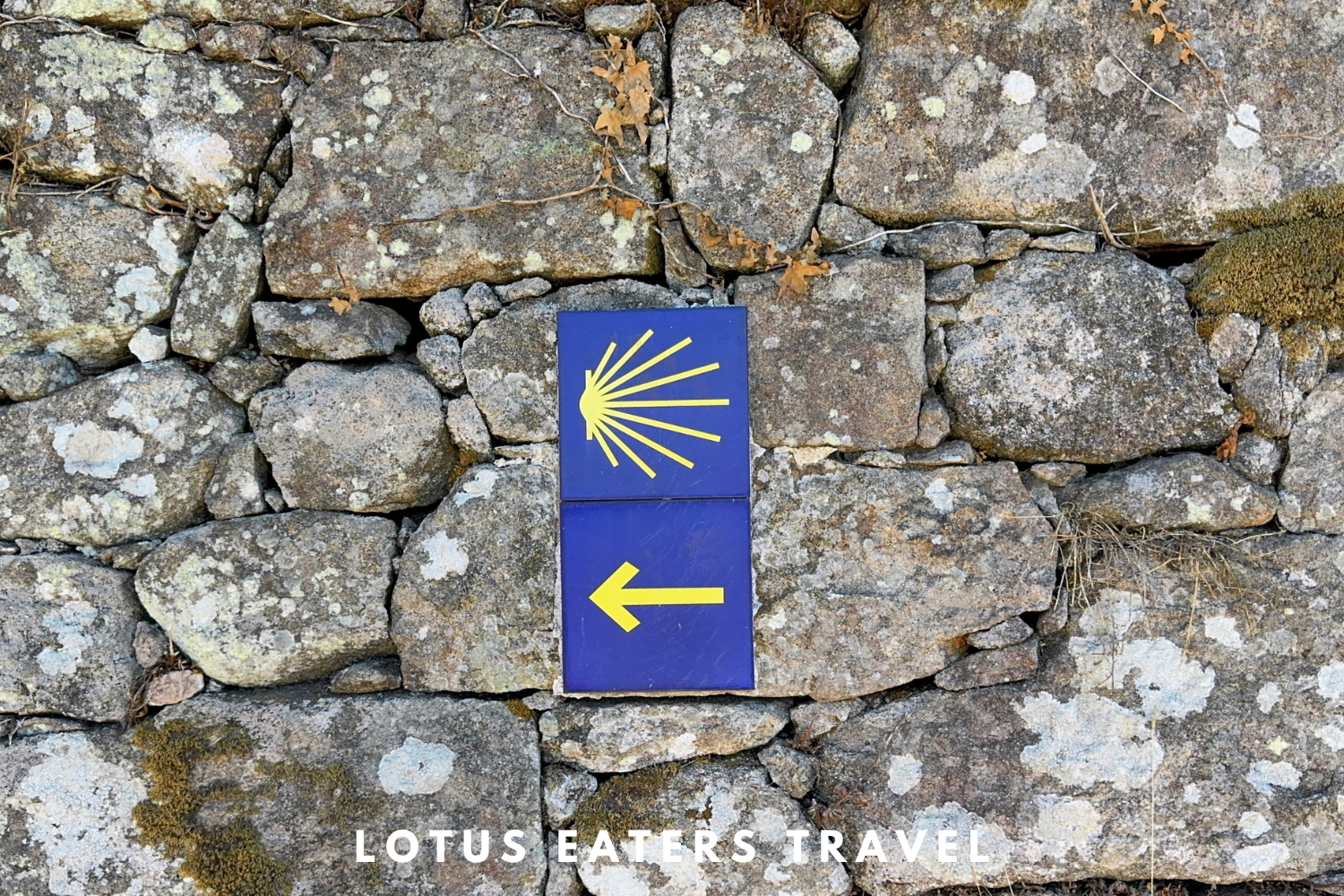
THE LAST 100km OF THE CAMINO DE SANTIAGO: WHICH ROUTE TO CHOOSE?
If you’ve been thinking about walking the Camino de Santiago, chances are you’ve come across the magic number: 100km.
For many pilgrims, walking the last 100km to Santiago de Compostela is the perfect introduction to the Camino. It’s long enough to experience the camaraderie, the early morning starts, the little villages, the pilgrim hostels and the satisfaction of arriving in Santiago on foot. But it doesn’t require weeks of holiday or months of preparation.
There is just one problem. There isn’t only one way to walk the last 100km.
In fact, there are several different Camino routes that you can choose from, each offering something a little different. Some are busy and sociable, with plenty of accommodation and cafes along the way. Others are quieter, taking you through rural Galicia, peaceful woodland and sleepy villages.
We’ve walked several of these routes ourselves, including the Camino Frances, the Camino del Norte, the Camino Portuguese, the Camino Sanabrés and the Spiritual Variant. And whilst we love the experience of walking into Santiago, we’d be the first to admit that not all Camino routes are created equal.
So, if you’re wondering which last 100km of the Camino de Santiago to choose, here’s our guide to the different options, including the pros and cons of each route, how long they take and suggested daily stages.
Why walk the last 100km
There are lots of reasons why walking the last 100km of the Camino de Santiago is so popular.
For starters, it’s achievable for most people with a reasonable level of fitness. You don’t need to take three or four weeks off work, nor do you need to be an experienced long-distance hiker. Most people can complete the final 100km in around four to six days, depending on the route and how far they want to walk each day.
It’s also a brilliant way to experience the Camino without committing to a much longer journey.
You’ll still get the important ingredients: collecting stamps in your pilgrim credential, staying in albergues, meeting other walkers, stopping for a coffee in little Galician villages and, eventually, arriving at the Cathedral in Santiago de Compostela.
There’s also a rather special incentive for walking at least 100km. If you meet the requirements, you can receive the Compostela, the certificate issued by the Pilgrim’s Office in Santiago to recognise completion of the pilgrimage.
Of course, it’s worth noting that you don’t have to walk the last 100km to receive your Compostela – rules changed recently and now the only requirements are to walk 100km on one route and to walk the last stage into Santiago de Compostela.
And, of course, there’s the practical consideration. Not everyone has the time, budget or inclination to walk 800km across Spain. Walking the final 100km is a way to enjoy the experience on a shorter holiday.
But here’s something worth knowing: the final 100km of the Camino Frances is not necessarily the best option for everyone. It’s certainly the most popular, but there are some lovely alternatives if you’d prefer something quieter, more scenic or a little different.
It’s also worth noting that the last 100km of most routes are busier than other stretches. For that reason, we often encourage people to try a 100km stretch elsewhere – this might work for you, if you’re not set on walking into Santiago. Here you can find a guide to alternative 100km stretches on various Camino routes.
Why the last 100km may not be the best idea
I really understand why so many people gravitate towards the last 100km of the Camino de Santiago. But with increasing numbers of people walking the different routes, the last 100km of the most popular routes (Frances and Portuguese) do suffer with crowds.
Now that the Compostela rules have changed, when I’m planning Camino routes for clients, I always encourage them to consider walking a different section of the route. Even if getting a Compostela is important to them.
Oftentimes, the prettiest or most scenic stretch of the Camino route is not the last 100km – I’d say this is the case for the Frances, the Portuguese and the Norte. And, you can enjoy better walking, and more peaceful atmosphere, by choosing an alternative stretch.
The other thing I’ve noticed, over many years of walking the Camino, is that many people walk a section of the Camino and then decide to return to walk another section. For this reason, sometimes it’s better to walk the first 100km of a given route, then return at a later date to complete more.
If this idea appeals to you – you can find a guide to alternative 100km stretches on various Camino routes.
That said, there are still valid reasons to walk the last 100km. Read on to find out more about the different Camino routes you can take into Santiago de Compostela.
Which routes are the most popular?
The Camino Frances is the most popular Camino route overall, and the section from Sarria to Santiago is particularly busy.
However, the Camino Portuguese is increasingly popular too, with both the Central and Coastal routes attracting large numbers of pilgrims.
According to the 2025 Pilgrim’s Office statistics, the Camino Frances accounted for approximately 45.6% of pilgrims receiving a Compostela. The Portuguese Central route accounted for 19%, and the Portuguese Coastal route a further 16.9%.
The Camino Ingles, Camino Primitivo and Camino del Norte and Camino Sanabres are considerably less busy by comparison. But, it’s worth noting that the Primitivo and del Norte both merge with the Frances route for the last 60-70km or so.
Here’s how the main routes compare:
| Route | Starting point | Approx. distance to Santiago |
|---|---|---|
| Camino Frances | Sarria | 115km |
| Camino Sanabrés | Ourense | 105km |
| Camino Primitivo | Lugo | 100–102km |
| Camino Portuguese Central | Tui | 115–116km |
| Camino Portuguese Coastal | Vigo | 101km |
| Camino del Norte | Baamonde | 102km |
| Camino Ingles | Ferrol | 111–115km |
One thing we would say is that popularity doesn’t necessarily mean a route is better.
In fact, we tend to advise most people to actively avoid the last 100km of the Frances, which can feel overcrowded during peak season.
Getting your Compostela
One of the main reasons people choose to walk the last 100km of the Camino is to receive the Compostela.
The Compostela is a certificate issued by the Pilgrim’s Office in Santiago de Compostela. It recognises that you’ve completed the pilgrimage, subject to meeting the official requirements.
That said, it’s worth remembering that you no longer need to walk the last 100km into Santiago de Compostela to get your Compostela.
To qualify, you need to:
- Walk at least 100 continuous kilometres on one route (or 200km if cycling).
- Carry an official pilgrim credential, known as a Credencial del Peregrino.
- Collect at least two stamps (sellos) per day during the final 100km of your journey.
- Complete the pilgrimage for religious or spiritual reasons, or at least with the intention of seeking either.
You can collect stamps from churches, albergues, hotels, cafes, restaurants and other establishments along the Camino.
We recommend getting into the habit of collecting two stamps every day, even when there are plenty of opportunities to collect more.
The different routes
Now, let’s get into the different options.
We’ve included seven routes and variants below, starting with the most popular choices and moving towards some of the quieter alternatives.
1/ Camino Frances from Sarria


Sarria is probably the first place that comes to mind when people talk about walking the last 100km of the Camino de Santiago. Sarria is the traditional starting point for pilgrims who want to walk the final section of the Camino Frances.
It’s a very well-established route, with plenty of accommodation, restaurants, cafes and services along the way. You’ll rarely have to walk very far before finding somewhere to stop for a coffee or a bite to eat.
But there’s a reason it’s so popular. And that does mean it can get busy.
Key info
- Starting point: Sarria
- Route: Camino Frances
- Distance: Approximately 115km
- Typical duration: 4–6 days
- Difficulty: Moderate
- Crowds: Very busy, particularly in peak season
- Best for: First-time pilgrims, sociable walkers and anyone wanting a straightforward experience.
The route from Sarria takes you through the green countryside of Galicia, passing small villages and farmland mostly.
You’ll pass through the towns of Portomarín, Palas de Rei, Melide and Arzúa before joining the final approach into Santiago.
One of the lovely things about this route is the infrastructure. There are plenty of places to stay, eat and rest, so it’s relatively straightforward to plan your stages and you can walk shorter or longer days, depending on fitness levels.
Pros and Cons


Pros
- Very well established, with excellent infrastructure.
- Plenty of cafes, restaurants and accommodation.
- Easy to organise, particularly for first-time pilgrims.
- A sociable route with lots of opportunities to meet other walkers.
- Plenty of flexibility around daily distances.
- A lively atmosphere as you approach Santiago.
Cons
- It’s the busiest of the last 100km routes.
- Some sections can feel crowded, especially during peak season, this can mean long queues in cafes and just a general feeling of overcrowding.
- Accommodation can book up quickly in peak season.
- You’ll encounter quite a lot of road and track walking.
- The experience can feel less peaceful than on some of the alternative routes. We find it a little commercial feeling, as there are so many purpose built Camino cafes and souvenir stands. It feels less authentic than other routes into Santiago.
Our verdict: The Camino Frances from Sarria is a great option if this is your first Camino and you want to experience the traditional pilgrim atmosphere. However, if you’re hoping for long stretches of peaceful walking, we’d consider one of the alternatives.
Typical Daily Stages
There are lots of different ways to cut the daily stages from Sarria to Santiago de Compostela. Below is a “typical itinerary.”
| Day | Stage | Distance |
|---|---|---|
| 1 | Sarria to Portomarín | 22km |
| 2 | Portomarín to Palas de Rei | 25km |
| 3 | Palas de Rei to Arzúa | 29km |
| 4 | Arzúa to O Pedrouzo | 19km |
| 5 | O Pedrouzo to Santiago | 20km |
More info
You can find more info on our Camino Frances daily stages guide here.
2/ Camino Sanabres from Ourense


If you’re looking for something a little quieter, the Camino Sanabrés from Ourense is one of our favourite alternatives.
We walked this route in 2026, and it turned out to be exactly the Camino we didn’t know we needed. After experiencing the busier sections of the Frances and Portuguese routes, we were ready for something a little more peaceful.
The Sanabrés from Ourense covers just over 100km to Santiago. It’s a relatively short route, but it still gives you a proper taste of the Camino experience.
There are peaceful woodland trails, sleepy villages, beautiful Galician countryside and, in our experience, far fewer pilgrims.
Key info
- Starting point: Ourense
- Route: Camino Sanabrés
- Distance: Approximately 105km
- Typical duration: 4 days
- Difficulty: Moderate to challenging, depending on your daily stages
- Crowds: Quiet compared with the Frances and Portuguese routes
- Best for: Experienced walkers, those wanting a quieter Camino and anyone who enjoys rural trails.
Ourense is a lovely place to begin. It’s a historic Galician city, famous for its Roman bridge, thermal baths and excellent wine and tapas scene.
From here, the route heads north through rural Galicia, passing through Cea, A Laxe, Silleda and Bandeira before eventually arriving in Santiago.


One of the things we particularly enjoyed was how quickly we found ourselves away from the city and into the countryside.
The route is not without its challenges, though. There are some substantial daily distances and fewer accommodation options than on the Frances. You need to be a little more organised, particularly when planning where to stay.
Pros and Cons

Pros
- Much quieter than the Camino Frances and Portuguese Central.
- Beautiful Galician countryside, woodland and villages.
- A lovely option if you want to avoid the crowds.
- Ourense is a fantastic starting city, with plenty to explore.
- A good selection of municipal albergues with a few private B&Bs/ hotels along the way.
- Adaptable daily stages that can be longer or shorter.
- A very special, peaceful arrival into Santiago.
Cons
- There is only one “private albergue” on route – walkers need to rely on municipal and private hotels.
- Services and cafes are less frequent in some sections.
- Less of a traditional, sociable Camino atmosphere – we met 5 or 6 pilgrims on the entire route.
- Personally, we found the villages and towns on route a little quiet, but it didn’t stop us enjoying the route.
Our verdict: We absolutely loved the Sanabrés. If you’ve already walked the Frances or Portuguese routes, or simply want a quieter experience, we’d highly recommend considering this one.
Typical Daily Stages


We walked the 105km from Ourense to Santiago in four days. This is how we split the route:
| Day | Stage | Distance |
|---|---|---|
| 1 | Ourense to Cea | 22km |
| 2 | Cea to A Laxe | 33km |
| 3 | A Laxe to Outeiro (Vedra) | 34km |
| 4 | Outeiro (Vedra) to Santiago | 17km |
These are long days, particularly the second and third, so this itinerary is best suited to people who are comfortable walking 30km or more.
You could split the walk into five days, or even take a detour to visit the beautiful Monastery of Oseira.
For us, the highlight was the third day, through woodland trails and welcoming towns such as Silleda and Bandeira. And the final approach into Santiago, with hardly another pilgrim in sight, was particularly special.
More info
You can read our full account here: The Camino Sanabrés: Journey from Ourense to Santiago de Compostela.
3/ Camino Primitivo from Lugo


The Camino Primitivo is often described as one of the toughest Camino routes. It starts in Oviedo and crosses the mountains of Asturias before entering Galicia.
But, if you don’t have time for the full route, you can also walk the last 100km from Lugo.
Lugo is a historic city, famous for its remarkably well-preserved Roman walls. It’s a lovely place to spend a night before setting off on foot and it quickly became on our favourite ever Camino cities.
From here, the route passes through rural Galicia, eventually joining the Camino Frances at Melide.
It’s worth noting that starting in Lugo means you miss the mountainous sections that make the Primitivo so famous. So, it’s a completely different experience.

Key info
- Starting point: Lugo
- Route: Camino Primitivo
- Distance: Approximately 100–102km
- Typical duration: 4–5 days
- Difficulty: Moderate
- Crowds: Relatively quiet initially, becoming much busier after Melide
- Best for: Those wanting a quieter alternative to Sarria and walkers interested in the history of Lugo.
One important consideration is the distance. Lugo is very close to the minimum 100km requirement for the Compostela. We would check your chosen route carefully before setting off, and avoid shortcuts or variations that could take you below the required distance.
Pros and Cons
Pros
- A quieter starting section than the Camino Frances.
- Rural Galician countryside.
- Lugo is a fascinating city to explore before your walk.
- A good option for those wanting a shorter section of the Primitivo.
- You join the Camino Frances at Melide, where there are plenty of services.
Cons
- You miss the mountainous and more challenging sections of the full Primitivo.
- The route becomes much busier and less authentic feeling once you reach Melide and join the Camino Frances.
- Accommodation options can be limited in some villages.
Our verdict: We think this is an interesting alternative to Sarria, particularly if you’d like to walk a quieter section before joining the Frances. Just don’t choose Lugo expecting to experience the full mountain adventure of the Primitivo.
Typical Daily Stages
A potential four day split is:
| Day | Stage | Distance |
|---|---|---|
| 1 | Lugo to Ferreira | 26km |
| 2 | Ferreira to Boente | 26km |
| 3 | Boente to Santa Irene | 24km |
| 4 | Santa Irene to Santiago de Compostela | 23km |
This suggested itinerary misses some of the busiest towns like Melide and Arzua. But of course, it is possible to organise your daily stages to stay overnight in towns, rather than rural locations, if you’d prefer.
More info
You can find our detailed daily stages guide for the Camino Primitivo here. As well as our guide to visiting Lugo here.
4/ Camino Portuguese from Tui


The Camino Portuguese Central route from Tui is a great option for anyone looking for a good balance between infrastructure, scenery and atmosphere.
The route begins just across the Spanish border from Portugal, in the historic town of Tui. From here, it’s approximately 115–116km to Santiago.
It’s a well-established route, with plenty of accommodation and places to stop along the way. It’s also a lovely introduction to Galicia, passing through vineyards, woodland, historic towns and some beautiful countryside.
We particularly like the variety along this route. There are some lovely historic towns to explore, including Pontevedra, and the final approach to Santiago is very rewarding.
Tip: You could also start in Valenca, which is across the border in Portugal. This could give you at least a little taste of Portugal before you enter Galicia.

Key info
- Starting point: Tui
- Route: Camino Portuguese Central
- Distance: Approximately 115–116km
- Typical duration: 5–6 days
- Difficulty: Moderate
- Crowds: Busy, particularly in peak season
- Best for: First-time pilgrims, sociable walkers and those wanting good facilities along the route.
One of the main advantages of the Portuguese route is the infrastructure. There are plenty of albergues, hotels, restaurants and cafes, making it relatively easy to organise your daily stages.
Pros and Cons
Pros
- Excellent infrastructure and plenty of accommodation.
- A good balance of countryside, towns and historic places.
- Plenty of cafes and restaurants along the way.
- Easy to organise, with lots of flexibility around daily stages.
- A sociable route with a good pilgrim atmosphere.
Cons
- Increasingly busy, particularly in summer.
- Some sections involve road walking.
- The route passes through towns and more built-up areas.
- Accommodation can be busy in peak season.
- Some pilgrims may prefer a more rural or isolated experience.


Our verdict: We think the Portuguese Central route is an excellent all-rounder. It has a lovely atmosphere, good facilities and enough variety to keep things interesting. If you’re walking your first Camino, this is certainly one we’d consider.
Typical Daily Stages
There are several ways to split the route, but here’s a popular six-day itinerary:
| Day | Stage | Distance |
|---|---|---|
| 1 | Tui to O Porriño | 16km |
| 2 | O Porriño to Redondela | 15km |
| 3 | Redondela to Pontevedra | 19.5km |
| 4 | Pontevedra to Caldas de Reis | 21km |
| 5 | Caldas de Reis to Padron | 19km |
| 6 | Padron to Santiago de Compostela | 25km |
This gives you a relatively comfortable walking schedule, with a few longer days towards the end. It’s also entirely possible to walk this route in five days – as we did.
More info
You can find our detailed daily stages guide for the Camino Portuguese Central Route here.
5/ The Spiritual Variant


The Spiritual Variant is a little different from the other routes in this guide. Rather than being a separate 100km Camino, it’s an alternative section of the Camino Portuguese that you can take after leaving Pontevedra.
And, in our opinion, it’s one of the most beautiful parts of the Portuguese Camino.
We recently walked the Spiritual Variant after joining the Central route from the Coastal route. By the time we reached Pontevedra, we were ready for a change. The main Camino had become noticeably busy, and we were craving some quieter trails.
The Spiritual Variant was exactly what we needed.
It takes you away from the main route and into a quieter part of Galicia, passing through the historic fishing village of Combarro, vineyards, woodland and the beautiful Monastery of Armenteira.
There’s also a rather special ending. Instead of walking the entire way to Padrón, you can take a pilgrim boat along the Arousa River to Pontecesures, following the traditional route associated with the transportation of St James’ remains.
It’s a lovely experience and something quite different from the usual Camino walking stages.


Key info
- Starting point: Approximately 2km after Pontevedra
- Route: Spiritual Variant of the Camino Portuguese
- Distance: Approximately 74km in total, including 28km by boat, you can then walk the remaining 28km into Santiago from Pontecesures. The total distance from Pontevedra to Santiago via the Spiritual Variant is 101km – and the boat ride counts towards your Compostela.
- Typical duration: 3–4 days
- Difficulty: Moderate
- Crowds: Much quieter than the main Portuguese route
- Best for: Those wanting a quieter experience, beautiful scenery and something a little different.
The route is approximately 46km on foot and 28km by boat. Most pilgrims complete the walking section over two or three days, then take the boat from Vilanova de Arousa to Pontecesures. After Pontecesures you have 28km remaining to walk into Santiago de Compostela.
It’s important to remember that the Spiritual Variant is part of the longer Portuguese route. But that’s not to say that you can’t start in Pontevedra, which gives you 101km in total.
Pros and Cons
Pros
- One of the quietest sections of the Portuguese Camino.
- Beautiful scenery, including forests, vineyards and rivers.
- The historic village of Combarro is well worth visiting.
- The Monastery of Armenteira is a highlight.
- The Ruta de Pedra e Auga (Stone and Water Route) is particularly beautiful.
- The pilgrim boat is a unique experience.
- A wonderful alternative if the main Portuguese route feels too busy.
Cons
- You need to plan around the boat crossing. Boat tickets should be booked in advance, particularly in peak season.
- The boat adds an additional cost to your Camino.
- There are fewer accommodation options than on the main route and we recommend planning well ahead.
- Some sections have limited cafes and services.
- A 500m climb out of Combarro can make this a challenging route for some walkers.
- The route requires a little more planning.
Our verdict: We absolutely loved the Spiritual Variant. It was a highlight of our recent Portuguese Camino, and we’d happily walk it again. If you’re walking the Portuguese route and want to escape the crowds for a couple of days, we’d highly recommend taking this detour.
Typical Daily Stages
We chose to walk the Spiritual Variant over three days, taking the boat on the fourth.
| Day | Stage | Distance |
|---|---|---|
| 1 | Pontevedra to Combarro | 11.5km |
| 2 | Combarro to A Ponte de Cabanelas | 19km |
| 3 | A Ponte de Cabanelas to Vilanova de Arousa | 14km |
| 4 | Vilanova de Arousa to Pontecesures by boat | 28km by boat |
After arriving in Pontecesures, you can continue towards Santiago or stay overnight in the area. From Pontecesures, it’s approximately 28km to Santiago, so many pilgrims choose to split the remaining walk over one or two days.
More info
You can find our detailed guide to walking the Spiritual Variant of the Camino Portuguese route here.
6/ Camino Portuguese Coastal from Vigo


The Camino Portuguese Coastal route is another popular option, particularly if you love walking near the sea.
The Coastal route follows the Atlantic coastline from Portugal into Galicia, passing beautiful beaches, fishing villages and coastal towns.
That said, if you start in Vigo, you do miss a lot of this because the route quickly joins the central route after Vigo. Personally, I would recommend beginning in Baiona, adding an extra day or two to your walk. Or considering an alternative stretch on this Portuguese Coastal Camino – for example, Viana do Castelo to Vigo is a lovely 90km stretch, whilst Porto to Vigo is 170km.
Key info
- Starting point: Vigo (or Baiona for a little longer)
- Route: Camino Portuguese Coastal
- Distance: Approximately 101 km from Vigo, or around 120km from Baiona
- Typical duration: 4–6 days
- Difficulty: Moderate
- Crowds: Busy, particularly in May to June and September.
- Best for: Coastal scenery, beaches, seafood and those who enjoy walking near the sea.
The route from Vigo passes through Redondela, where it joins the Camino Portuguese Central. From there, you’ll continue through Pontevedra, Caldas de Reis and Padrón before arriving in Santiago.
If you start in Baiona, you’ll enjoy a longer coastal section, including some beautiful scenery around the Rías Baixas.

Pros and Cons
Pros
- Starting in the city of Vigo, which is quite convenient.
- Good infrastructure.
- You get a glimpse of the coast, but not as much as you would if you start the route in Baiona.
Cons
- Starting in Vigo doesn’t give you much of a glimpse of the coast. And this section is busy – many tour groups start in Vigo.
- The route becomes even busier after joining the Central Camino at Redondela.
- Some of the most beautiful coastal sections are further south of Vigo.
Our verdict: If you love coastal walking, the coastal from Vigo may sound tempting. But if you actually want to spend time on the coast, we wouldn’t recommend just this last section. The last 80km are entirely inland. Instead, consider starting earlier, for example in Baiona (from which point you can take the lovely Litoral Variant to Vigo). Or walking a different stretch of the Camino Coastal Route – like Viana do Castelo to Vigo.


Typical Daily Stages
For those starting in Vigo, a typical itinerary might look something like this:
| Day | Stage | Approx. distance |
|---|---|---|
| 1 | Vigo to Redondela | 16km |
| 2 | Redondela to Pontevedra | 19km |
| 3 | Pontevedra to Caldas de Reis | 20km |
| 4 | Caldas de Reis to Padrón | 18km |
| 5 | Padrón to Santiago | 24km |
More info
You can find all of our resources on the Camino Portuguese Coastal Route here.
7/ Camino del Norte from Baamonde

The Camino del Norte is one of the most beautiful long-distance Camino routes, following the northern coast of Spain before turning inland towards Santiago.
If you want to walk just the final 100km, you can start in Baamonde, in Galicia.
This section is a little different from the earlier stages of the Norte. You’ll be walking through rural Galicia, passing small villages, forests and farmland before joining the Camino Frances at Arzúa.
It could be a lovely option if you want a few days of quieter walking before joining the Camino Frances. But it’s worth keeping in mind that the route is entirely inland and you do miss the most interesting parts of the Camino del Norte.
Personally, if I had a week or so, I’d much rather walk from San Sebastian to Bilbao, or another 100km section of the Norte, which gives glimpses of the coast.


Key info
- Starting point: Baamonde
- Route: Camino del Norte
- Distance: Approximately 102km
- Typical duration: 4–5 days
- Difficulty: Moderate
- Crowds: Quiet initially, becoming busier after Arzúa
- Best for: Those wanting a quieter alternative and walkers who enjoy rural landscapes.
One thing to be aware of is that there are two route options shortly after Baamonde, at Toar.
The original route through Santa Leocadia (Miraz) is longer than the newer alternative through A Pobra de Parga. If you’re walking from Baamonde specifically to qualify for the Compostela, it’s important to choose the longer route. The shorter option could leave you below the required 100km.
Pros and Cons
- A much quieter alternative to the Camino Frances.
- Beautiful rural Galician scenery.
- A lovely opportunity to experience part of the Camino del Norte.
- The monastery at Sobrado dos Monxes is a highlight.
- You join the Camino Frances at Arzúa, with plenty of facilities towards Santiago.
- A good option for those wanting a more peaceful Camino.
Cons
- Fewer services in the earlier stages.
- Accommodation options are more limited in some places.
- The route becomes busier after joining the Frances.
- Some sections involve road walking.
- You effectively miss the most beautiful aspects of the Camino del Norte.
Our verdict: We think the Norte is a great alternative if you’re looking for a quieter start to your Camino. The route through Sobrado dos Monxes is particularly lovely, and the monastery is well worth a visit.
Typical Daily Stages


Here’s a popular five-day itinerary:
| Day | Stage | Distance |
|---|---|---|
| 1 | Baamonde to Miraz | 15.5km |
| 2 | Miraz to Sobrado dos Monxes | 24.5km |
| 3 | Sobrado dos Monxes to Arzúa | 22km |
| 4 | Arzúa to O Pedrouzo | 20km |
| 5 | O Pedrouzo to Santiago | 20km |
This is a fairly balanced itinerary, although there are options to complete the walk in four days if you’re comfortable with longer distances.
More info
You can find our detailed daily stages itinerary for the Camino del Norte here.
8/ Camino Ingles from Ferrol
The Camino Ingles is another excellent option for walking the final section of the Camino.
Historically, this was the route used by pilgrims arriving in Galicia by sea from England and other parts of northern Europe. Today, it’s a popular alternative to the Frances and Portuguese routes.
The route starts in Ferrol and covers approximately 111–115km to Santiago, making it a good option for anyone wanting to complete the minimum distance required for the Compostela.
Unlike some of the other routes in this guide, the Camino Ingles doesn’t simply follow the same final stretch as another major Camino. It has its own identity, passing through Galician towns, forests and countryside.
Key info
- Starting point: Ferrol
- Route: Camino Ingles
- Distance: Approximately 111–115km
- Typical duration: 5 days
- Difficulty: Moderate
- Crowds: Quieter than the Frances and Portuguese routes
- Best for: Those wanting a shorter, quieter Camino with its own history and character.
The route passes through Pontedeume, Betanzos, Hospital de Bruma and Sigüeiro before arriving in Santiago.
One thing to know is that the first stage from Ferrol can be quite long, with some significant climbs. If you prefer shorter walking days, it’s possible to split this stage and take six days instead.
Pros and Cons
Pros
- A quieter alternative to the most popular Camino routes.
- Enough distance to qualify for the Compostela.
- Interesting history and a strong maritime connection.
- Galician countryside.
- A relatively straightforward route to organise.
- Plenty of opportunities to explore traditional Galician towns.
Cons
- The first stage can be quite challenging.
- Some sections involve road walking.
- There are fewer accommodation options than on the Frances.
- Some stages have limited services between towns.
- Less of a large, sociable pilgrim atmosphere.
Our verdict: The Camino Ingles is a lovely option if you’re looking for a shorter, quieter Camino with a little history. We particularly like the fact that it offers a different experience from the more familiar routes, whilst still giving you enough distance to receive the Compostela.
Typical Daily Stages
The standard five-day itinerary is:
| Day | Stage | Distance |
|---|---|---|
| 1 | Ferrol to Pontedeume | 28km |
| 2 | Pontedeume to Betanzos | 20km |
| 3 | Betanzos to Hospital de Bruma | 24km |
| 4 | Hospital de Bruma to Sigüeiro | 24km |
| 5 | Sigüeiro to Santiago | 16km |
If you’d prefer shorter days, you can split the first stage by staying in Neda, making this a six-day walk.
Written by Emma
Wine Lover. Yogi. Hiker. Writer.
British travel writer and long-distance hiker, native to Kent. Emma has walked the Camino de Santiago more than ten times, completed trails across Europe from the Corfu Trail to the Fisherman’s Trail, and covered thousands of kilometres on foot. She always writes from first-hand experience. Her goal? Inspire just one person to go on their first long-distance hike.


More Camino Travel Guides


USEFUL LINKS FOR FLIGHTS, ACCOMMODATION AND TRANSPORT


FOLLOW US ON SOCIAL MEDIA
Please note that some links on our website are partnered with affiliates. Using an affiliate links does not make it more expensive for you to purchase. We receive a small commission whenever you buy something which in turn allows us to keep writing independent travel guides and your support is greatly appreciated.
Leave a Reply