

WHICH CAMINO ROUTE SHOULD YOU CHOOSE – GUIDANCE + QUIZ.
The Camino de Santiago offers a variety of routes, each providing unique experiences for pilgrims. Choosing the right path depends on factors such as available time, desired difficulty, and personal interests. Below is an overview of the main Camino routes to assist you in making an informed decision.
We’ve personally walked the Camino de Santiago seven times in just the last 3 years. As such, we’ve got pretty good knowledge of all of the main routes.
Choosing the route to take is one of, if not, the biggest decisions you’ll make about your Camino experience. This guide and our quiz can hep you to make that all important decision.
Which is the most beautiful Camino route? And which is the easiest? But more importantly, which is the best route for you?
The main Camino routes

Let’s start with a basic question, is there more than one Camino de Santiago route?
There are in fact multiple Camino de Santiago routes. Over 200 Camino routes have been registered, many of them are minor alterations to the main routes. In terms of established Camino routes, there are seven that we most well known.
The main seven routes (plus two that we think will become more popular) can be found in the map below.

1. Camino Francés (French Way)


- Length: Approximately 780 km (485 miles)
- Starting Point: Saint-Jean-Pied-de-Port, France
- Duration: Typically 4 to 5 weeks
- What we liked:
- Passes through notable cities such as Pamplona, Logroño, Burgos, and León
- Diverse landscapes including the Pyrenees, vineyards of La Rioja, and the Meseta plateau
- Great food and wine on route, many fine dining options as well as hearty grub
- Lively atmosphere and opportunity to socialize
- Great infrastructure, good on a budget and felt safe
- Lots of lovely walking trails and much less road than the other main Camino routes
- Popularity: The most travelled route, offering a well-established infrastructure with numerous albergues (hostels) and services
- What we didn’t like: Can be crowded, especially during peak seasons, there’s a risk that it could feel “generic” if you stick to the same daily stages as the majority of pilgrims.
Find our daily stages guide for the Camino Frances here.
2. Camino Portugués (Portuguese Way)


There are many different ways to walk the Portuguese route. It’s common parlance to refer to the inland version of the Portuguese route from either Lisbon and Porto as the “central” or “inland” Portuguese route.
Whilst the coastal variant, which runs from Porto to Santiago is called the “Portuguese coastal.” Within the coastal route, you can also follow the Spiritual Variant (a few days on a slightly different route entering Padron).
Phew! It gets complicated really fast – luckily we have guides for the Inland/ Central route and the Coastal route, so you can feast on as much information as you like.
- Length: Approximately 610 km (380 miles) from Lisbon; 240 km (150 miles) from Porto
- Starting Points: Lisbon or Porto, Portugal
- Duration: 2 to 4 weeks, depending on the starting point
- What we liked:
- Coastal scenery (on the coastal route) and historic towns on both
- Option to choose between the inland route and the coastal route and option to add Spiritual Variant – you can make the route you own
- It’s a lot of fun walking / taking the boat from Portugal to Spain and travelling into two countries
- Portuguese food/wine and Spanish food/wine – win win
- This can be a great budget option – especially the section in Portugal
- Flatter terrain makes it accessible to for pilgrims with varying fitness levels
- A great Camino to “dip your toe in the water” – for example, I recently took my Mum on her first Camino on the Portuguese route for a few days to try it (spoiler – she loved it.)
- Popularity: Second most popular route (the coastal variant), with increasing infrastructure
- What we didn’t like: The route doesn’t feel as challenging as others, walking form Porto takes between 10 and 14 days and it can feel like its all over too soon when arriving to Santiago.
3. Camino del Norte (Northern Way)


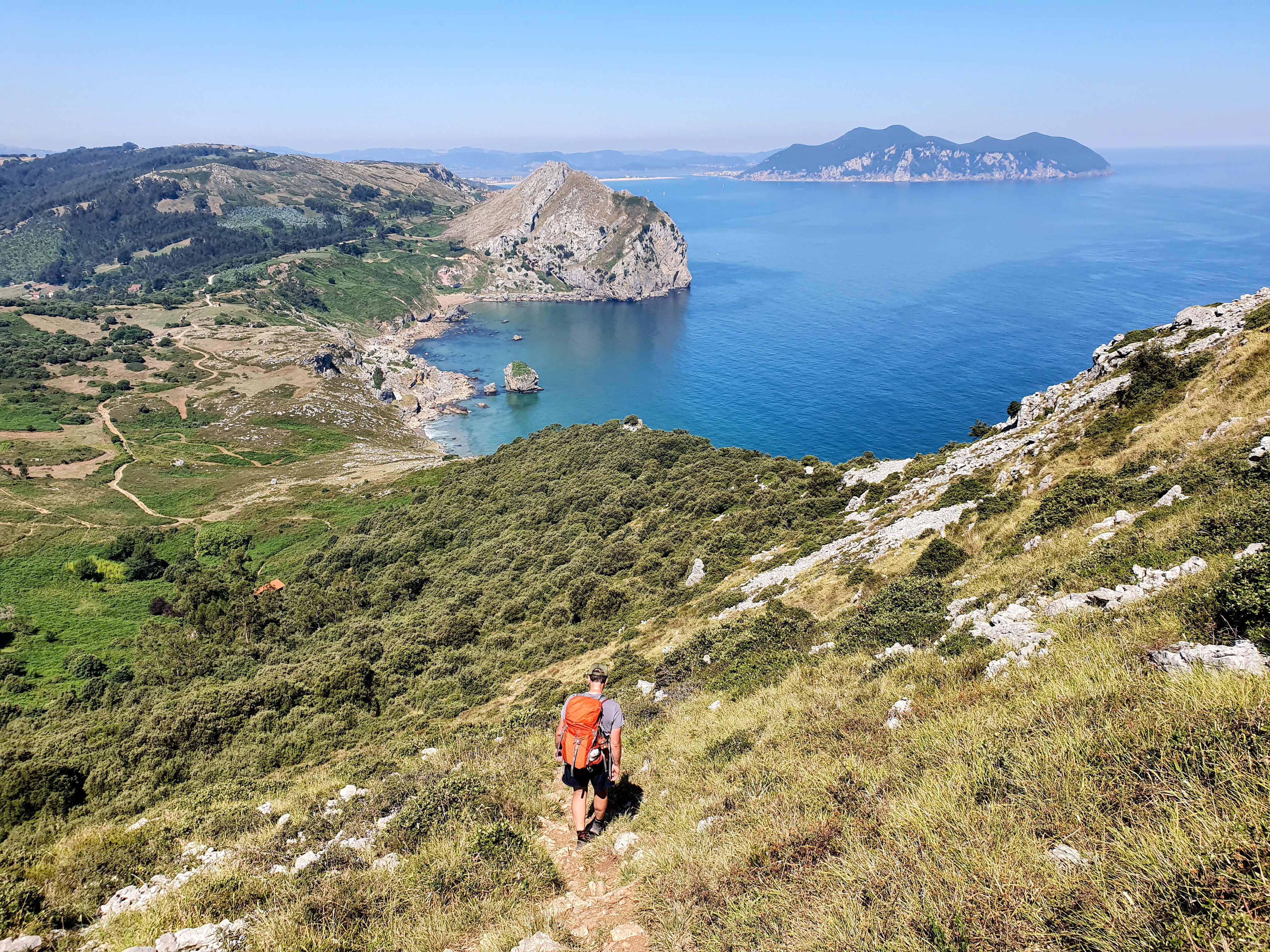
- Length: Approximately 825 km (513 miles)
- Starting Point: Irún, near the French border
- Duration: About 4 weeks
- What we liked:
- Stunning coastal views along Spain’s northern coast
- Passes through cities like San Sebastián, Bilbao, and Santander
- Incredible food and wine
- Getting to visit lesser known regions, like Cantabria and Asturias – each region on route has a totally different vibe
- As this is a less popular route, you see the same pilgrims along the way many times. It feels like a really collegiate experience.
- Popularity: Less crowded than the Camino Francés, offering a more solitary experience
- What we didn’t like: We had some challenges with accommodation and had to walk a few longer days, private accommodation on the coast can be expensive. This route has the most road walking of the main routes.
Find our daily stages guide for the Camino del Norte here.
4. Camino Primitivo (Original Way)
- Length: Approximately 321 km (200 miles)
- Starting Point: Oviedo, Spain
- Duration: 2 weeks
- Highlights:
- Considered the oldest Camino route
- Traverses mountainous regions with breathtaking scenery
- Popularity: Less traveled, ideal for those seeking solitude
- Considerations: Challenging due to rugged terrain; best suited for experienced hikers – we hope to hike this route in 2025.
5. Camino Inglés (English Way)


- Length: Approximately 119 km (74 miles) from Ferrol
- Starting Point: Ferrol or A Coruña, Spain
- Duration: 3 to 7 days
- What we liked:
- Historically used by pilgrims arriving by sea from
- England and Ireland
- Lush Galician countryside and coastal views
- A Coruna is a fun city and a good place to start
- Suitable when you don’t have time for the other routes
- Popularity: Gaining popularity due to its shorter length
- What we didn’t like: Fairly limited accommodation in some areas, the route only travels through Galicia.
6. Camino de Finisterre and Muxía


Length: Approximately 90 km (56 miles) to Finisterre; an additional 28 km (17 miles) to Muxía
Starting Point: Santiago de Compostela
Duration: 3 to 5 days
What we liked:
- Continues to the Atlantic coast, traditionally considered the “end of the world”
- Scenic coastal landscapes
- Feels like an emotional and spiritual adventure
Popularity: Often undertaken as an extension after reaching SantiagoWhat we didn’t like: The weather near to the coast can be inclement – even in the summer.
What we didn’t like: The weather near to the coast can be inclement – even in the summer.
Find our guide to the daily stages of the Camino Finisterre here.
Choosing the Right Camino Route for You
When selecting a Camino route, consider the following factors:
1/ Time Available: Longer routes like the Camino Francés require over a month, while shorter routes like the Camino Inglés can be completed in under a week. But, don’t forget that you can do a section of one of the longer routes.
Many pilgrims choose to walk just the last 100km – this is because this is the minimum required to obtain your Compostela in Santiago. If that’s not a consideration for you, then you could consider walking between two cities – like from San Sebastian to Bilbao or Leon to Santiago.
If this sounds like something you’d be interested in, get in touch. We plan bespoke Camino itineraries based on our personal requirements.
2/ Physical Fitness: Some routes, such as the Camino Primitivo, involve challenging terrain and are better suited for experienced hikers.
I would also include the Camino del Norte in this bracket. That said, the routes can be adapted to meet your own requirements for fitness and pace. Plus, with enough time you can train. So don’t rule yourself out too soon!
Find our Camino training plan here.
3/ Desired Experience: If you seek camaraderie and a social atmosphere, the Camino Francés or the Portuguese route is ideal. For solitude and reflection, consider the Camino del Norte or Camino Primitivo. But also consider the time of year when you walk, as this will determine how many people are on route.
4/ Scenery Preferences: Coastal views are prominent on the Camino del Norte and the Portuguese Coastal Way, while the Camino Francés offers diverse inland landscapes.
5/ Cultural Interests: Routes like the Camino Francés pass through numerous historic towns and cities, enriching the cultural experience. That said, every route that I’ve taken has given more than enough in terms of culture and chance for spiritual reflection.
Each Camino route offers a unique journey, allowing you to choose one that aligns with your personal goals and preferences. Whether seeking spiritual growth, physical challenge, or cultural immersion, the Camino de Santiago provides a path that caters to every pilgrim’s aspirations.
Which route should you take: A quiz
Still undecided? Find our short quiz below.
Which Camino Route is Best for You?
Facts about the major Camino routes
Here's a bit more detail about the different routes.
The Camino Frances is the most popular route


There are six Camino de Santiago routes that are most popular. Of these six by far the Camino Frances is the most popular. Statistics from the Santiago pilgrims office show that roughly 50% of pilgrims on the Camino walk or cycle part of the Camino Frances.

As you can see from the diagram above, in 2023 around half of all pilgrims completed part or all of the Camino Frances. That equates to 219,794 people!
The second most popular route is the Portuguese Central route with 18,054 people in 2023, closely followed by the Portuguese Coastal route, with 12,561 people in 2023.
We think the Camino del Norte is the prettiest route....


Generally, most people believe that the Camino del Norte is the most beautiful in terms of landscape. This is because you walk along Northern Spain through Asturias, Cantabria and Galicia and at times have the option to walk on a direct coastal path overlooking the ocean.
Not only that, but you will walk through the stunning cities of San Sebastian, Bilbao and Gijon. Personally, the Camino del Norte remains my favourite route due to the incredible scenery.
That said, we recently walked the Portuguese Coastal Camino and I will admit that some of the days spent walking alongside the wild Atlantic Coast were very difficult to beat. Simply stunning beaches stretching for miles.
However, many people note that the Primitivo route from Oviedo, with the incredible mountain views is also stunning. And certain parts of the Camino Frances, particularly around O Cebreiro are majestic. Indeed, it is difficult to argue that any of the Camino routes in Spain and Portugal are not beautiful.
Find out more about the Camino del Norte here. And, the Portuguese Coastal Camino route here.
The Camino del Norte is thought to be the most challenging
In general, most people will think of the Camino del Norte as the hardest of the longer (i.e. month long) Caminos walks. This is because there are many undulating hill climbs compared to the Camino Frances. However, many who have walked the Camino Primitivo will confirm that they found that harder than the Norte, often due to challenging weather conditions and extreme climbs.
Find out more about the Camino del Norte here.
The Portuguese route is easiest and flattest


Generally, most people will say that the Camino Ingles is the easiest route as it is short (around 70km from Coruna).
Of the longer Caminos, the Portuguese route from Porto to Santiago is considered to be one of the flattest routes. The Camino Frances, the French route, is also flatter than the Camino del Norte, but it would be difficult to describe it as an easy route!
Find out more about the Portuguese Route here.
The Frances or Portuguese are probably the best for first timers
Many would say that the Frances is the best Camino route for your first time. This may be the case, especially if you want a route with more infrastructure to ease you in.
However, if you're looking for solitude, we don't necessarily recommend the Camino Frances for the first time. The Portuguese route, or Norte are alternatives. Another option is to walk a section, such as the last 100km.
The Norte and Portuguese Coastal have beaches
The Camino del Norte has many beaches. There are sections inland, but the majority of the route allows you to hit the beach at the end of each day, and during your walking day too. Picture white sand contrasting with green countryside and bright blue sea.


The Portuguese Coastal Camino also benefits from miles and miles of gorgeous wild coastline. As well as some quieter coves towards Vigo.
The Norte and Frances pass through notable cities

I would never claim to be able to name the "best cities" in Spain. But, in my personal opinion the Camino route with the best cities is the Camino del Norte. On this route, you'll enjoy San Sebastian, Bilbao, Santander and Gijon - all of which are well worth visiting, and spending a rest day in if you can.
A close second is the Camino Frances which passes through Pamplona, Leon, Logrono and Burgos. And, don't forget the smaller cities such as Astorga and Ponferrada.
You can find a full guide to the best cities on the Camino routes here.
The Norte is the quietest of the long routes

Of the routes that we walked, I would say that the Camino del Norte is the most peaceful - often we would only see a handful of other pilgrims in a day. A close second would be the Camino Primitivo.
The Frances has the least road/ most trail

The Camino del Norte has the most road of all the Camino routes, with approximately 560km on road, versus 250km on trail. That said, there are often (but not always) coastal paths that can be taken instead of road.
Comparatively, the Camino Frances has the most trail. It has 500km of trail compared to 300km of road approximately.
You can see a full breakdown of the trail to road ratios on the main Camino routes below.
| Route | Road (approx) | Trail (approx) |
| Camino Frances | 300km | 500km |
| Primitivo | 150km | 160km |
| Camino del Norte | 560km | 250km |
| Ingles from Ferrol | 80km | 30km |
| Portuguese Coastal Camino | 220km | 50km |
| Portuguese Central Camino | 200km | 40km |
Which Camino route is safest for women to walk alone?

Firstly, it's important to say that many women walk the Camino alone each year. If you choose to walk solo, you will never feel truly alone.
However, choosing a route is important to ensure that you feel safe, comfortable and get the most from your adventure. I have walked alone and I do know that it can be an uncomfortable feeling if you have to walk into a quiet trail in forests alone. There's a sense of liberation, but also an unease that naturally comes from being a woman alone.
Personally, I would recommend choosing either the Camino Frances or one of the two Portuguese routes (inland or central.) The Camino Frances is by far the most popular route, meaning that you will always be surrounded by other pilgrims. The Camino Portuguese Coastal & Inland routes also are quite busy, making you feel safe and cocooned amongst other walkers.
You will find that you will less people day to day on the The Camino Primitivo and Norte. I wouldn't want to pigeon hole any woman walking and suggest that you must walk a busy route. You may be seeking the solitude of a quieter walk. The path is your own to choose.
I've written a book just for women walking the Camino based on my own experience. It is packed full of information to help women walking for the first time, as well as some fun anecdotes. Find it on Amazon here.
Which is the best Camino route for seniors?
I would always recommend the Portuguese Coastal or Portuguese Inland route for seniors walking the Camino for the first time. In fact, I recently walked part of the Portuguese route with my mother (I won't tell you her age, but she is technically a senior.) Clearly, seniors can choose any route they want! And many do. But, the Portuguese can suit seniors for a number of reasons:
- Luggage transfer is well set up - meaning you can easily get luggage transferred from one hostel to another rather than carrying backpacks
- The routes are flatter - there is some incline, but compared to other Camino routes, the Portuguese Camino routes are flatter
- Infrastructure is good - with frequent hotels, hostels and cafes, you don't have to walk long distances each day.
- Public transport is good - particularly on the Portuguese Coastal route, the public transport is great. Meaning, if you get injured or need to take a rest day you can.
Want to know more about the Camino routes?
We've got two guide books available in Ebook format for the Camino del Norte and Camino Frances. Both books set out the daily stages, provide helpful tips for planning and include route specific accommodation advice.
You can find them here in our shop.


You can also find all of our Camino books, including the popular Camino de Santiago Survival Guide on Amazon.
Want to start preparing for the Camino?


Once you've decided on your route, there are a few more things to think about when it comes to preparing for the Camino.
You can find our guide to preparing for the Camino here - the four things you need to think about.
If the routes sound daunting please don’t worry. We promise that you can walk the Camino! With a little training and determination, you can do it.
We have created two wonderful products to help you train for the Camino:
- A comprehensive training plan, incorporating walking, strength training and yoga - find it here
- A bespoke yoga for hiking course, designed specifically to help you train for long distance hiking - find it here
Next up - is packing. See more on this below.
What should I pack for the Camino de Santiago?
If you would like more suggestions for packing for the Camino, you can find our supreme Camino packing list for 2024 here. This is our “lightweight” backpack packing list, based on our experience from walking multiple Caminos.

Would you like us to plan your walk for you?
Embark on a journey of a lifetime with Lotus Eaters Travel Planning, where we turn your dream of long-distance walking into a meticulously planned reality.
Our passion for exploration, love for diverse cultures, and commitment to providing an unparalleled experience drive us to offer personalized consultation services for some of the world’s most iconic walking trails
Alternatives to the Camino de Santiago


If you're not sure that the Camino is the best one for you, why not explore alternatives to the Camino de Santiago? Here are three that the Lotus Eaters Travel team have tried and loved.
Via Francigena, UK to Italy
This is a route taking you all the way from Kent in the UK to Puglia in Southern Italy. A bit like the Camino de Santiago, you could also opt to walk stretches of it, rather than the entire 3000km. You can find more information on the Via Franciegena here.
St Olav's Way, Norway
We recently walked from Oslo to Trondheim on St Olav's Way. A fantastic pilgrimage and walking experience and a great alternative to the Camino de Santiago. You can find out more about that here.
The Lycian Way, Turkey
Beyond the traditional Caminos, there are many incredible long distance walking paths to consider. A great one, especially if you want to walk out of season, is the Lycian Way in Turkey.
You can find our guide to the Best Long Distance Hikes in Europe Here. And to the best pilgrimages in Europe here.
Where can I get a sim card?
Need a sim card on landing or about to fly off? Rather than the hassle of finding/getting a physical sim card, an easier method these days is to get an e-sim. Simply select the country or region you are in and get data and calls on your phone. More info can be found here.
Prices are reasonable, usually only $25 for 20GB of data. We now always use this method when travelling as it just saves so much time and bother!
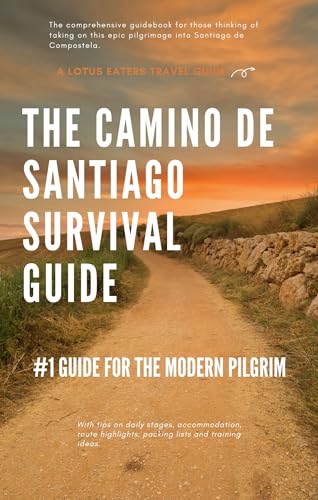
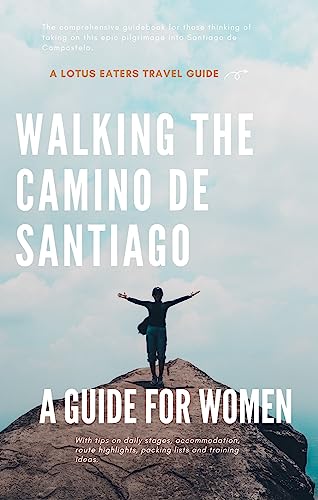
John and Emma's hiking gear. These are items we love to use when we go hiking, find them here on Amazon.






Read more Camino
18 best long distance hikes in Europe for June
18 BEST LONG DISTANCE HIKES IN EUROPE FOR JUNE. June is one of the very best months for hiking in Europe. Summer has arrived, the days are long, and most trails are finally free of winter…

Do you need to book accommodation on the Camino Primitivo?
DO YOU NEED TO BOOK ACCOMMODATION ON THE CAMINO PRIMITIVO? PROS AND CONS. We walked the Camino Primitivo recently and after much debate, decided to book all of our accommodation ahead of time. While the Primitivo…
Taking the ferry from Laredo to Santoña: a short guide
TAKING THE FERRY FROM LAREDO TO SANTONA ON THE CAMINO DEL NORTE: A SHORT GUIDE. Walking the Camino del Norte along Spain’s northern coast brings many unique experiences. For me, one that stands out is the…
How to Take the Pilgrim Ferry from Caminha to A Guarda (Camino Portuguese)
HOW TO TAKE THE PILGRIM FERRY FROM CAMINHA TO A GUARDA: A SHORT GUIDE. If you’re walking the Camino Portuguese Coastal Route, sooner or later you’ll reach the Minho River at Caminha and face a simple…
Where can you see the 2026 total eclipse on the Camino de Santiago?
WALKING THE CAMINO DURING THE 2026 TOTAL SOLAR ECLIPSE. I know that it’s only 2025 as I write this, but if you’re anything like us – you are already thinking about summer hiking next year. And…
What to pack for the Camino Primitivo: our guide
WHAT TO PACK FOR THE CAMINO PRIMITIVO: A COMPLETE GUIDE. We’ve walked so many long-distance hikes now that I’ve lost count, and this year we walked the Camino Primitivo for the first time. Of course, I…
Something went wrong. Please refresh the page and/or try again.
Most of our planning is done using other blogs, but you can't beat a guide book at the bottom of your case.
Find them here on Amazon.

USEFUL LINKS FOR FLIGHTS, ACCOMMODATION AND TRANSPORT


CHECK LATEST FLIGHTS
ACTIVITIES TO CONSIDER
FOLLOW US ON SOCIAL MEDIA
Please note that some links on our website are partnered with affiliates. Using an affiliate links does not make it more expensive for you to purchase. We receive a small commission whenever you buy something which in turn allows us to keep writing independent travel guides and your support is greatly appreciated.


Leave a Reply